-
E-mail
3241984301@qq.com
-
Phone
15312954526
-
Address
No. 79 Chongchuan Road, Chongchuan District, Nantong City, Jiangsu Province
Product Categories
Jiangsu Qiucheng Electromechanical Co., Ltd

Germany imported Wieland connector 83.210.1501.2
NegotiableUpdate on 01/07
- Model
- Nature of the Manufacturer
- Producers
- Product Category
- Place of Origin
Overview
Jiangsu Qiucheng High Tech - European Industrial Control Product Import High Quality Supplier $r $n wuerth HBM Ergowiss SPECK Vaisala $r $n $r $n $r $n $r $n Germany Imported Wieland Connector 83.210.1501.2
Product Details
Connector, also known as CONNECTOR. Also known as connectors, plugs, and sockets domestically. Generally refers to electrical connectors. A device that connects two active components and transmits current or signals.
Connectors are a type of component that electronic engineering technicians often come into contact with. Its function is very simple: to build a communication bridge between blocked or isolated circuits within the circuit, so as to allow current to flow and achieve the predetermined function of the circuit. Connectors are components in electronic devices, and when you observe the path of current flow, you will always find one or more connectors. The form and structure of connectors are constantly changing, with various forms depending on the application object, frequency, power, application environment, etc. For example, the connectors used for lighting on the field and hard drive connectors, as well as the connectors used for igniting rockets, are very different. However, regardless of the type of connector, it is necessary to ensure smooth, continuous, and reliable current flow. In general, connectors are not limited to electrical current. In today's rapidly developing optoelectronic technology, the carrier of signal transmission in fiber optic systems is light, and glass and plastic have replaced wires in ordinary circuits. However, connectors are also used in the optical signal path, and their functions are the same as circuit connectors.
Germany imported Wieland connector 83.210.1501.2
Germany imported Wieland connector 83.210.1501.2
Basic meaning
Connectors are a type of component that electronic engineering technicians often come into contact with. Its function is very simple: to build a communication bridge between blocked or isolated circuits within the circuit, so as to allow current to flow and achieve the predetermined function of the circuit. Connectors are components in electronic devices, and when you observe the path of current flow, you will always find one or more connectors. The form and structure of connectors are constantly changing, with various forms depending on the application object, frequency, power, application environment, etc. For example, the connectors used for lighting on the field and hard drive connectors, as well as the connectors used for igniting rockets, are very different. However, regardless of the type of connector, it is necessary to ensure smooth, continuous, and reliable current flow. In general, connectors are not limited to electrical current. In today's rapidly developing optoelectronic technology, the carrier of signal transmission in fiber optic systems is light, and glass and plastic have replaced wires in ordinary circuits. However, connectors are also used in the optical signal path, and their functions are the same as circuit connectors.
foldEdit this paragraphreason for use
| 83.209.2203.0 |
| 00.705.0503.3 |
| 81.000.6550.0 |
| 81.000.6540.0 |
| 83.040.0106.0(Ethernet-Switch with 8 RJ45-Ports, 10/100/1000 Mbit/s) |
| 81.000.6134.0,WIPOS P1 48-5 |
| 81.000.6130.0,WIPOS P1 24-5 |
| 81.000.6120.0,WIPOS P1 24-2.5 |
| 81.000.6140.0,WIPOS P1 24-10 |
| 81.000.6132.0,WIPOS P1 12-5 |
| 83.230.0009.5 |
| 80.063.4032.0 FLARE MOVE 38 24VDC6A |
| 80.063.4001.1 FLARE MOVE SF38 24V DC |
| 80.010.4502.0 |
| 81.000.6530.0 |
| R1.188.1810.0 |
| 81.020.0001.0 |
| 81.000.6550.0 |
| 80.010.4502.0 |
| 81.000.6540.0 |
| 80.010.5102.2 |
| 80.010.4902.3 |
| 83.230.0009.5 |
Imagine what would happen if there were no connectors? At this point, the circuits need to be connected together using continuous conductors. For example, if an electronic device needs to be connected to a power supply, the two ends of the connecting wires must be securely connected to the electronic device and power supply through some method (such as welding). In this way, both production and use have brought many inconveniences. Taking car batteries as an example. Assuming that the battery cable is fixed and welded firmly onto the battery, the automobile production factory increases the workload, production time, and cost for installing the battery. When the battery is damaged and needs to be replaced, it is necessary to take the car to a repair station, remove the old one by desoldering, and then weld a new one, which requires a significant amount of labor costs. With a connector, you can avoid many troubles. Just buy a new battery from the store, disconnect the connector, remove the old battery, install the new battery, and reconnect the connector. This simple example illustrates the benefits of connectors. It makes the design and production process more convenient and flexible, reducing production and maintenance costs.
foldEdit this paragraphBenefits of use
Improve the production process
Connectors simplify the assembly process of electronic products. It also simplifies the mass production process;
Easy to repair
If an electronic component fails, it can be quickly replaced when a connector is installed;
Easy to upgrade
With technological advancements, when connectors are installed, it is possible to update the components and replace old ones with new and more complete ones;
Improve the flexibility of design
The use of connectors provides engineers with greater flexibility when designing and integrating new products, as well as when assembling systems with components.
foldEdit this paragraphConnector performance
foldBasic Performance
| 83.230.0009.5 |
| 80.063.4001.1 FLARE MOVE SF38 24V DC |
| 80.063.4032.0 FLARE MOVE 38 24VDC6A |
| 80.010.4502.0 |
| 81.020.0001.0 |
| 80.010.5102.2 |
| 81.000.6550.0 |
| 81.000.6530.0 |
| 80.010.4502.0 |
| 81.000.6540.0 |
| 80.010.4902.3 |
| R1.188.1810.0 |
| 83.230.0009.5 |
| 00.702.0303.7 |
| 05.562.3000.0 |
| SNO4062K-A AC/DC 24V 50-60HZ (C) |
| 05.563.4700.0 |
| 05.562.3000.0 |
| 92.050.8153.0 |
| 83.210.5001.2 replacement for 83.210.5009.2 |
| 83.209.2203.0 |
| 83.209.2201.0 |
| 83.210.3001.2 |
| 83-039-0000-0 |
| 83-030-1300-1 |
The basic performance of connectors can be divided into three categories: mechanical performance, electrical performance, and environmental performance.
foldmechanical properties
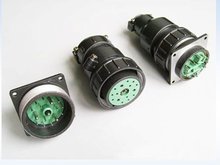 In terms of connection function, the mechanical performance of connectors is important in terms of insertion and extraction force. Insertion and extraction forces are divided into insertion force and extraction force (also known as separation force), and their requirements are different. If the separation force is too small, it will affect the reliability of the contact.
Another important mechanical performance is the mechanical lifespan of the connector. Mechanical lifespan is actually a durability indicator, referred to as mechanical operation in the national standard GB5095. It is evaluated based on whether the connector can complete its connection function (such as contact resistance value) normally after a specified insertion and extraction cycle, with one insertion and one extraction as one cycle. The insertion and extraction force and mechanical life of connectors are related to the contact structure (positive pressure size), the coating quality (sliding friction coefficient) of the contact area, and the accuracy of the contact arrangement dimensions (alignment).
foldElectrical performance
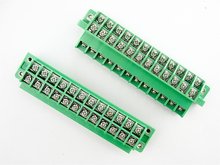 The main electrical performance of connectors includes contact resistance, insulation resistance, and electrical strength.
① High quality electrical connectors with high contact resistance should have low and stable contact resistance. The contact resistance of connectors varies from a few milliohms to tens of milliohms.
② The insulation resistance is an indicator that measures the insulation performance between the contact parts of an electrical connector and between the contact parts and the housing. Its magnitude ranges from several hundred megaohms to several hundred gigaohms.
③ Electrical strength, also known as withstand voltage or dielectric withstand voltage, is the ability to withstand the rated test voltage between connector contacts or between contacts and the housing.
foldenvironmental performance
Common environmental performance includes resistance to temperature, humidity, salt spray, vibration, and impact.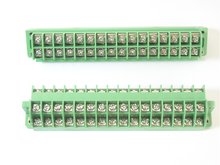
① The current temperature resistance of the connector. The alternating humidity test is more rigorous. ③ When salt spray resistant connectors work in environments containing moisture and salt, their metal structural components and contact surface treatment layers may undergo electrochemical corrosion, affecting the physical and electrical performance of the connector. In order to evaluate the ability of electrical connectors to withstand this environment, a salt spray test is specified. It suspends the connector in a temperature controlled test chamber and sprays a specified concentration of sodium chloride solution with compressed air to form a salt spray atmosphere. The exposure time is specified in the product specifications and is at least 48 hours. ④ Vibration and impact resistance is an important performance of electrical connectors, particularly important in special application environments such as aviation and aerospace, railway, and road transportation. It is an important indicator for testing the robustness of the mechanical structure and electrical contact reliability of electrical connectors. There are clear regulations in the relevant experimental methods. The peak acceleration, duration, and waveform of the impact pulse, as well as the time of electrical continuity interruption, should be specified in the impact test. ⑤ Other environmental properties of electrical connectors include sealing (air leakage, liquid pressure), liquid immersion (resistance to deterioration of specific liquids), low air pressure, etc., depending on usage requirements.
The miniaturization, high-speed mobility, and intelligence of connector products are the future development trends.
The future technological innovation in the industry will mainly focus on the following directions
1. Miniaturization development technology for connectors
This technology is mainly developed for the trend of connector miniaturization and can be applied to micro connectors below 0.3mm, belonging to the MINI USB series of new product varieties. Can be used for multi contact expansion card slot connectors, which can meet and exceed the strict requirements of multi contact surface adhesion technology for coplanar contacts, with high accuracy and low cost.
2. High frequency and high-speed wireless transmission connector technology
This technology is mainly aimed at various wireless device communication applications and has a wide range of applications.
3. Research on Simulation Application Technology
| 80.063.4032.0 FLARE MOVE 38 24VDC6A |
| 80.063.4001.1 FLARE MOVE SF38 24V DC |
| 80.010.4502.0 |
| R1.188.1810.0 |
| 81.000.6540.0 |
| 80.010.4902.3 |
| 81.000.6530.0 |
| 80.010.4502.0 |
| 81.000.6550.0 |
| 80.010.5102.2 |
| 81.020.0001.0 |
| 83.230.0009.5 |
| 00.702.0303.7 |
| 05.562.3000.0 |
| SNO4062K-A AC/DC 24V 50-60HZ (C) |
| 05.562.3000.0 |
| 05.563.4700.0 |
| 92.050.8153.0 |
| 83.209.2201.0 |
| 83.210.3001.2 |
| 83.210.5001.2 replacement for 83.210.5009.2 |
| 83.209.2203.0 |
| 83-039-0000-0 |
| 83-030-1300-1 |
| RICOS DP 8I 8I/0 83.030.1300.1 |
Simulation technology is based on multiple disciplines and theories, using computers and their corresponding software such as AutoCAD and Pro/E program stress analysis software as tools. By establishing product models and corresponding boundary conditions, the mechanical, electrical, high-frequency and other properties are simulated and analyzed to confirm, thereby reducing the cost of product development failure caused by material selection, unreasonable structure and other factors, improving the success rate of development, and providing support for the implementation of complex system applications for products.
4. Smart connector technology
This technology is mainly used in DC series power connector products, which can perform intelligent signal detection before transmitting power to ensure that the positive and negative poles are connected and the power supply is started only after the plug is inserted in place. It can avoid the adverse consequences of arc damage and machine burning caused by contact when the plug is not inserted in place. In the future, enterprises need to develop similar intelligent technologies for other products.
5. Precision connector technology
Precision connectors involve many aspects such as product design, process technology, and quality control technology. The main technologies include the following:
(1) Precision mold processing technology: using CAD, CAM and other technologies, introducing high-precision processing equipment from the industry, utilizing personnel production experience and equipment technology to achieve high-precision and high-quality mold products.
(2) Precision stamping and precision injection molding technology: achieving precision, efficiency, and stability for various stamping and injection molded parts=
(3) Automated assembly technology: By applying precision control technology, semi-automatic inspection machine technology, etc., it overcomes the difficulties of manual operation of precision products and improves core competitiveness.
The continuous development of application fields such as the automotive industry and computer communication industry has gradually expanded the market capacity of connectors, with an average annual growth rate of over double digits and great market development potential. Our country has become a growth driver for connectors
Similar Product Recommend


