-
E-mail
dwc@sgnprocess.com
-
Phone
19051253803
-
Address
12th Floor, 2755 Husong Road, Songjiang District, Shanghai
Product Categories
Shanghai Sijun Machinery Equipment Co., Ltd


Acetate fiber disperser
NegotiableUpdate on 01/07
- Model
- Nature of the Manufacturer
- Producers
- Product Category
- Place of Origin
Overview
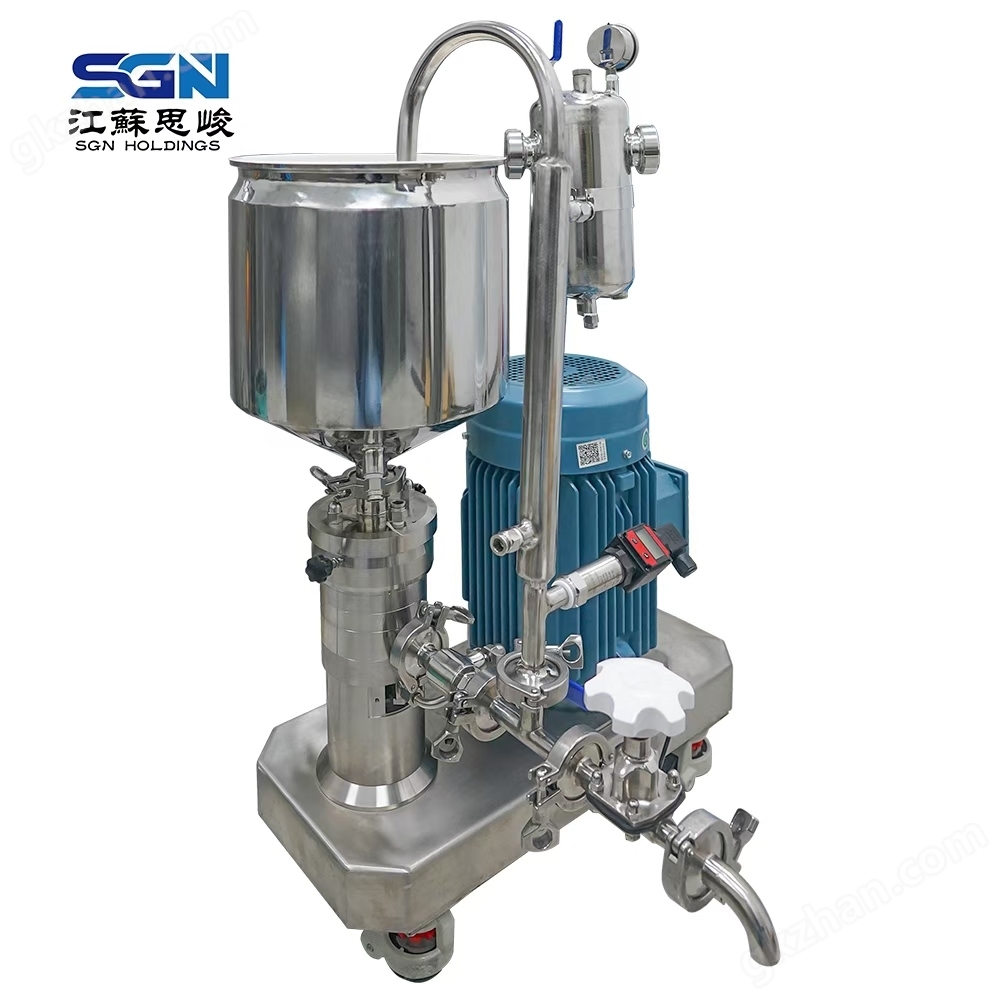
Acetate fiber disperser is a high-speed disperser designed and developed by our company for the acetate fiber process. It has the characteristics of large processing capacity, smoother operation, easier disassembly and assembly, suitable for industrial online continuous production, narrow particle size distribution range, and good dispersion effect.
Product Details
Acetate fiber is a synthetic fiber made from natural wood pulp (from sustainably managed trees), which undergoes a chemical reaction with acetic anhydride to produce cellulose acetate ester, which is then dissolved and spun. It is a chemically modified natural polymer, so it is not 100% natural like cotton or 100% synthetic like polyester, hence it is called a "semi synthetic" fiber.
Introduction to Production Process:
1. Raw material preparation: Pre treat wood pulp (high-purity cellulose).
2. Acetylation reaction: Pre treated cellulose is reacted with acetic anhydride under the action of a catalyst to produce cellulose acetate. This process replaces the hydroxyl group (- OH) on the cellulose molecule with the acetyl group (- OCOCH3).
3. Precipitation and hydrolysis: The reaction product is precipitated in water and then partially hydrolyzed to achieve the appropriate degree of acetylation and solubility.
4. Spinning: Dissolve hydrolyzed cellulose acetate in acetone to form a viscous spinning solution. Then, this solution is pressed into hot air through a spinneret, and acetone evaporates rapidly. The remaining solid acetate fibers are stretched into continuous filaments.
The working process of high shear disperser
1. Under the centrifugal force generated by the high-speed rotating rotor, the material in the figure is simultaneously sucked into the working chamber from the upper feeding area of the working head in the axial direction.
2. The strong centrifugal force throws the material radially into the narrow and precise gap between the stator and rotor. Simultaneously subjected to centrifugal compression, impact and other forces, the material is initially dispersed and emulsified.
3. At the outer end of the high-speed rotating rotor, a linear velocity of at least 15m/s is generated, which can reach up to 40m/s, and strong mechanical and hydraulic shear, liquid layer friction, and impact tearing are formed, allowing the material to be fully dispersed, emulsified, homogenized, crushed, and ejected radially. After one treatment or cyclic treatment, the dispersion, emulsification, and homogenization processes are finally completed.

Characteristics of acetate fiber disperser:
1. Large processing capacity, suitable for industrial online continuous production;
2. Narrow particle size distribution range and high uniformity;
3. Time saving, efficient, and energy-saving;
4. The precision cast integral frame and each rotor that has undergone precision dynamic balancing testing ensure low noise and smooth operation of the entire machine;
5. Eliminate quality differences in production between batches;
6. Materials are crushed, dispersed, and sheared;
7. Capable of short distance and low head transportation;
8. Easy to use and convenient to maintain;
9. Can achieve automated control;
10. Containerized mechanical seal ensures no leakage of materials;
Acetate fiber disperserSelection:
| dispersion machine | traffic | output | linear velocity | power | entrance/Export connection |
| type | l/h | rpm | m/s | kW | |
| GMSD 2000/4 | 300 | 14,000 | 41 | 4 | DN25/DN15 |
| GMSD 2000/5 | 1500 | 10,500 | 41 | 11 | DN40/DN32 |
| GMSD 2000/10 | 4000 | 7,200 | 41 | 22 | DN80/DN65 |
| GMSD 2000/20 | 10000 | 4,900 | 41 | 45 | DN80/DN65 |
| GMSD 2000/30 | 20000 | 2,850 | 41 | 90 | DN150/DN125 |
| GMSD2000/50 | 60000 | 1,100 | 41 | 160 | DN200/DN150 |
| *The flow rate depends on the set gap and the characteristics of the processed material, and can be adjusted to 10% of the maximum allowable amount. | |||||
Similar Product Recommend