-
E-mail
sales@filtrascale.com
-
Phone
15882220395
-
Address
Unit 2, Building 2, Shiyong International Building, No. 68 Chenghong Road, Chengdu, Sichuan Province
Product Categories
Chengdu Feichuang Technology Co., Ltd
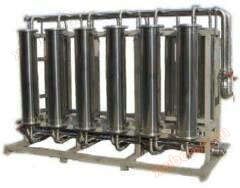
NF series nanofiltration device
NegotiableUpdate on 08/14
- Model
- Nature of the Manufacturer
- Producers
- Product Category
- Place of Origin
Overview
NF nanofiltration membrane mainly removes solute particles with a diameter of about 1 nanometer nm and a cut-off molecular weight of 100-1000. A major feature of nanofiltration membrane is that the membrane body is charged, which is an important reason why it still has high desalination performance and a cut-off molecular weight of hundreds at very low pressures, and can also remove inorganic salts
Product Details
Introduction to NF Nanofiltration Membrane
The membrane process of NF nanofiltration with a pore size in the nanometer range, suitable for separating dissolved components with a molecular weight of 100-1000 and a molecular size of approximately 1 nm, is called nanofiltration (NF). The transmembrane pressure difference required for NF membrane separation is generally 0.5-2.0 MPa, which is 0.5-3 MPa lower than the pressure difference required to achieve the same permeation energy using a reverse osmosis membrane. According to the operating pressure and separation boundary, NF can be qualitatively classified between reverse osmosis and ultrafiltration, sometimes referred to as "low-pressure reverse osmosis" or "loose reverse osmosis". The study of NS-300 membrane by J.E. Cadotte in the 1970s marked the beginning of research on NF membrane. At that time, the Israeli desalination company used "mixed filtration" to refer to the membrane separation process between reverse osmosis and ultrafiltration. Later, American companies called this membrane technology nanofiltration, which has been used ever since. Afterwards, NF developed rapidly and membrane modules were commercialized in the mid-1980s. At present, NF has become one of the hotspots in the field of membrane separation research worldwide.
Characteristics of NF nanofiltration membrane
1. The core membrane element adopts original imported organic membrane, and different membrane forms are selected according to the process technology requirements and specific user needs to ensure the membrane element retention performance, membrane flux, and the stability and reliability of the entire membrane system operation in different systems.
2. The nanofiltration membrane system can achieve simultaneous desalination and concentration of materials at lower operating pressures, with a short production cycle, thorough desalination, high product purity, and good quality stability.
3. According to the specific needs of customers, the permeate passing through the nanofiltration membrane can be recovered, and the membrane components can be restored to their optimal performance after professional cleaning, fully realizing the economic efficiency of the membrane equipment.
4. The processing is always at room temperature without any phase change, which has no adverse effects on the active components in the material. It is particularly suitable for the treatment of thermosensitive substances, and the resulting product has a high content of active components. According to the process requirements, it can continue to enter the next section or be directly dried.
5. The system adopts a fully enclosed pipeline operation, ensuring safety and hygiene at the work site, and can meet GMP or FDA standardized production requirements.
6. Due to the absence of phase change in the system processing, it remains at room temperature, resulting in low energy consumption and low operating costs.
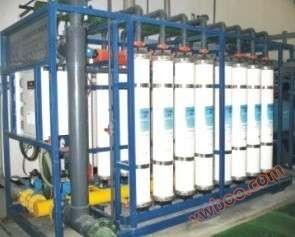
7. High degree of process integration, reasonable layout, fully automatic control, online monitoring of important process parameters, and real-time monitoring of system operation status.
application area
1. Softened water: Remove hardness components such as Ca and Mg.
2. Drinking water: Traditional drinking water treatment mainly removes suspended solids and bacteria from water through flocculation, sedimentation, sand filtration, and chlorination disinfection, with low removal efficiency for various soluble chemicals. With the intensification of environmental pollution in water sources and the improvement of drinking water standards in various countries, the "deep treatment of drinking water" that can remove various organic and harmful chemicals is increasingly receiving attention.
3. Food, beverage, and pharmaceutical industries: The application of nanofiltration membranes in this field is very active, such as the concentration and refining of various proteins, amino acids, vitamins, dairy products, alcoholic beverages, seasonings, etc.
4. Chemical industry: concentration and separation.
5. Treatment of reclaimed water and wastewater.
Similar Product Recommend