-
E-mail
2067886464@qq.com
-
Phone
13002785510
-
Address
Hengyi Baolian, Kuiwen District, Weifang City, Shandong Province
Product Categories
Shandong BenQ Environmental Protection Equipment Co., Ltd
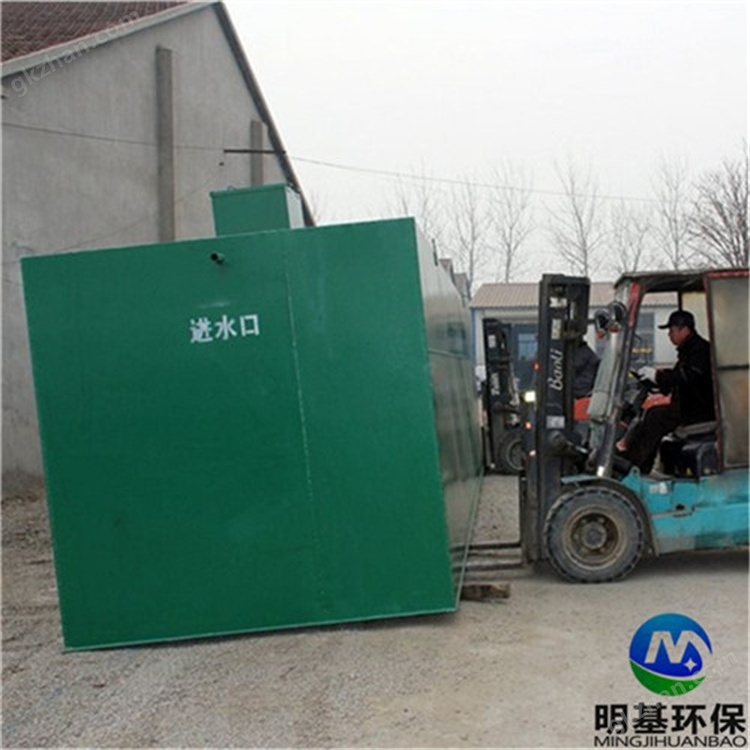


Rural integrated sewage treatment equipment
NegotiableUpdate on 01/07
- Model
- Nature of the Manufacturer
- Producers
- Product Category
- Place of Origin
Overview
Rural integrated sewage treatment equipment can be roughly divided into pre-treatment, biological treatment, sedimentation treatment and other processes. The principle is to first treat the sewage entering the equipment through screening, filtering, reaction and other processes in the pretreatment area, removing large particle impurities and sediment from the incoming water
Product Details
Integrated sewage treatment equipment has been widely used in various fields such as cities, rural areas, industrial parks, and resorts. When selecting equipment, it is necessary to consider multiple aspects such as quality, performance, price, and maintenance, in order to choose the appropriate equipment to achieve the desired sewage treatment effect.
Rural integrated sewage treatment equipmentprinciple
Integrated sewage treatment equipment can be roughly divided into pre-treatment, biological treatment, sedimentation treatment and other processes. The principle is to first treat the sewage entering the equipment through screening, filtering, reaction and other processes in the pretreatment area, removing large particle impurities and sediment from the incoming water; Then it enters the biological treatment area and undergoes processes such as aerobic biology, aerobic denitrification, anaerobic reactions, etc., which can remove most of the organic matter and nutrients such as nitrogen and phosphorus; Pump to the sedimentation zone, remove residual suspended solids through gravity sedimentation and filter material permeability, and the treated water quality meets the discharge standards, which can be directly reused or discharged into the water environment.
Features of the equipment
Efficient and energy-saving: The technology and design commonly used in equipment can achieve efficient sewage treatment with low energy consumption, reducing operating costs. For example, the aeration system of some devices adopts intelligent control technology, which can automatically adjust the aeration amount according to the sewage quality and treatment capacity.
Excellent Material: The main body of the equipment is made of corrosion-resistant and high-strength materials, such as stainless steel, fiberglass, etc., which have a long service life and can adapt to different sewage environments.
High degree of automation: Equipped with an automated control system, it can achieve remote monitoring, fault diagnosis, automatic alarm and other functions, reduce manual intervention, and improve the efficiency of equipment operation and management. Operators can access the device's operational status anytime and anywhere through their mobile phones or computers.

Compact and beautiful: More emphasis is placed on space utilization in design, with compact equipment structure and small footprint. At the same time, the appearance design of the equipment is relatively beautiful and coordinated with the surrounding environment, especially suitable for places with high environmental requirements.
The buried integrated sewage treatment equipment can be buried below the ground surface, effectively utilizing land resources. The surface above the equipment can be used for greening or other purposes without affecting the ground landscape. It has the characteristics of high automation, easy operation, and good treatment effect.Rural integrated sewage treatment equipment
Process Description
Anaerobic stage: Sewage enters the anaerobic tank, where under the action of anaerobic microorganisms, large molecular organic matter is decomposed into small molecular organic matter, while organic nitrogen is converted into ammonia nitrogen, creating conditions for subsequent aerobic treatment.
Aerobic stage: The effluent from the anaerobic tank enters the aerobic tank and is provided with sufficient oxygen for microorganisms through an aeration device. Aerobic microorganisms multiply in large numbers, decomposing organic matter into carbon dioxide and water, while converting ammonia nitrogen into nitrate nitrogen and nitrite nitrogen.
Sedimentation stage: The sewage that has undergone aerobic treatment enters the sedimentation tank to achieve sludge water separation. The settled sludge is partially returned to the anaerobic tank or aerobic tank, while the remaining sludge is treated and disposed of.
Disinfection stage: UV disinfection, chlorine dioxide disinfection and other methods are used to disinfect the effluent, kill bacteria and viruses in the water, and ensure that the effluent meets hygiene standards

Compared to traditional decentralized treatment methods, integrated sewage treatment equipment has the following advantages:
1. Small footprint
Traditional sewage treatment equipment usually requires a large amount of land, while integrated sewage treatment equipment usually only requires a small amount of land, saving land resources.
2. Low operating costs
The integrated sewage treatment equipment has adopted processes and technologies, which can effectively reduce operating costs.
3. Low energy consumption
The integrated sewage treatment equipment has adopted energy-saving technology, which can effectively reduce energy consumption and achieve the effect of energy conservation and emission reduction.
4. Easy to operate
The operation of integrated sewage treatment equipment is particularly simple, requiring only regular maintenance and cleaning of the equipment.
5. Reduce environmental pollution
Wastewater treatment equipment can effectively remove harmful substances and nutrients from wastewater, reducing environmental pollution.
Similar Product Recommend


