-
E-mail
2067886464@qq.com
-
Phone
13002785510
-
Address
Hengyi Baolian, Kuiwen District, Weifang City, Shandong Province
Product Categories
Shandong BenQ Environmental Protection Equipment Co., Ltd


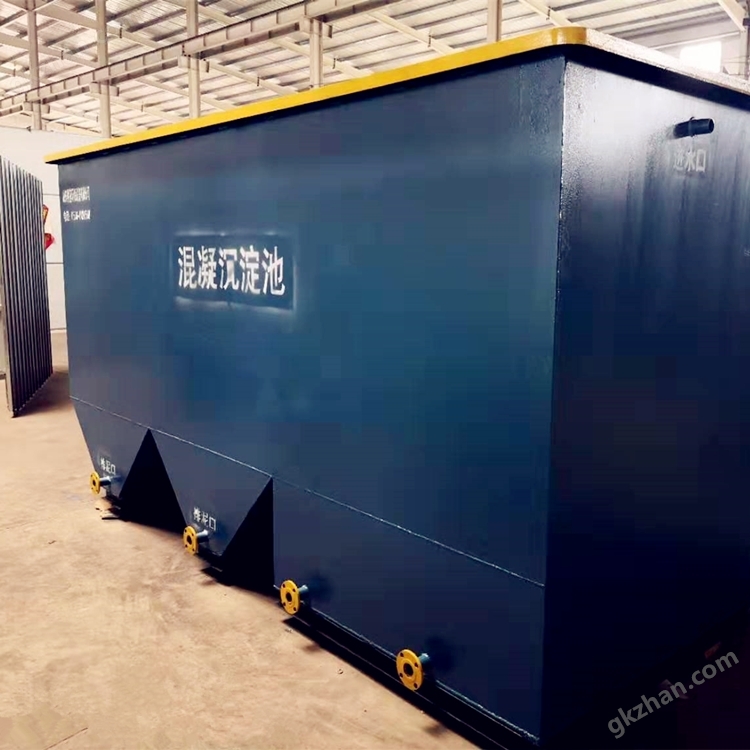

Detailed explanation of the structure of the coagulation sedimentation tank
NegotiableUpdate on 01/07
- Model
- Nature of the Manufacturer
- Producers
- Product Category
- Place of Origin
Overview
The structure of a coagulation sedimentation tank is like a precision "water purification factory", achieving efficient solid-liquid separation through scientific zoning. Its core structure includes five key parts
Product Details
Coagulation sedimentation tank is a commonly used equipment in the field of water treatment, used to remove suspended solids and turbidity in sewage, and improve water quality. It mainly aggregates suspended solids into larger particles through the addition, mixing, and settling of coagulants at the bottom of the pool, achieving water purification.
working principle
The working principle of the coagulation sedimentation tank is as follows:
1. Adding coagulant: Add an appropriate amount of coagulant to the sewage, and the choice of coagulant depends on the properties of suspended solids in the sewage. Common coagulants include polyaluminum chloride, polymeric ferric sulfate, etc.
2. Mixing: By using mechanical or stirring devices, the coagulant is thoroughly mixed with the wastewater, allowing the coagulant to interact with the suspended solids and causing them to aggregate.
3. Settling: The mixed sewage enters the sedimentation tank through the inlet pipe and is allowed to settle in the tank for a period of time, gradually settling the suspended solids to the bottom of the tank.
4. Outlet: Clear water flows out from the outlet pipe at the top of the sedimentation tank and can be directly discharged or further treated after a series of treatments.Detailed explanation of the structure of the coagulation sedimentation tank
Features of the equipment
The coagulation sedimentation tank can quickly remove suspended solids in sewage and effectively improve water quality
The equipment runs stably and reliably, and can work continuously for a long time.
The operation and maintenance of the equipment are relatively simple and do not require a large amount of human resources.
The equipment cost is economical and practical, and the operating cost is relatively low.
The structure of the coagulation sedimentation tank is like a precision "water purification factory", achieving efficient solid-liquid separation through scientific zoning. Its core structure includes five key parts:
Detailed explanation of core structure
Inlet system
Function: Uniformly introduce raw water to avoid short flow.
Design points: Use perforated walls or water distribution channels, control the flow velocity at the orifice at 0.1-0.2m/s, and ensure smooth diffusion of water flow.
Reaction zone
Function: Promote flocculation through folding or mechanical stirring.
Design key points: Control the flow velocity gradient within 50-100s ⁻¹, with a residence time of 10-30 minutes to ensure sufficient formation of flocs.
Sedimentation zone
Function: Achieve solid-liquid separation.
Design points: Adopting inclined tube/inclined plate structure, controlling the upward flow velocity at 0.5-1.0m/s, and achieving a sedimentation efficiency of over 90%.
Water outlet system
Function: Collect clear water.
Design points: Use overflow weirs or perforated collection pipes, and set up floating debris baffles in front of the weirs to prevent floating debris from overflowing.Detailed explanation of the structure of the coagulation sedimentation tank
Sludge discharge system
Function: Regularly remove sludge.
Design points: Mechanical scraper or static pressure sludge discharge, with the sludge discharge frequency adjusted according to the sludge accumulation rate.
Classification of coagulation sedimentation tanks
Coagulation sedimentation tanks can be classified based on their purposes and operating methods. Here are some common classifications:
1. Classified by purpose:
Wastewater treatment sedimentation tank: used for solid-liquid separation in the wastewater treatment process, which can remove suspended matter and sediment.
Rainwater collection and sedimentation tank: used to collect and store rainwater, and remove suspended matter and sediment through sedimentation.
Gaoxiao sedimentation tank: used for industrial water treatment with special needs, it can achieve a more efficient solid-liquid separation.
2. Classified by operation mode:
Static sedimentation tank: using natural sedimentation method, relying solely on gravity to settle solid particles to the bottom.
Dynamic sedimentation tank: enhances sedimentation effect and accelerates solid-liquid separation process through mechanical stirring or air flotation.
3. Classified by structure:
Circular sedimentation tank: With a simple structure, it is usually used in small-scale sewage treatment systems.
Long sedimentation tank: with a larger capacity, suitable for treating large amounts of sewage or limited site conditions.
It should be noted that there may be some differences in the design and operation of different coagulation sedimentation tanks. Choosing the appropriate type according to specific needs can improve treatment efficiency and economy.
Coagulation sedimentation tanks are widely used in the following fields:
1. Sewage treatment plant: As a primary treatment unit, it is used to remove large suspended particles and reduce the load on subsequent treatment equipment.
2. Industrial sector: Suitable for wastewater treatment in industries such as steel, petrochemicals, and pharmaceuticals, helping enterprises comply with discharge regulations.
3. Municipal engineering: Install coagulation and sedimentation tanks in urban sewage networks to protect the environment and improve water quality.
Similar Product Recommend


