-
E-mail
18917038407@163.com
-
Phone
18917038407,18918574312,18917074297,18918572467
-
Address
713, No. 6, Lane 99, Jiayong Road, Jiading, Shanghai
Product Categories
Shanghai Qiantuo Trading Co., Ltd
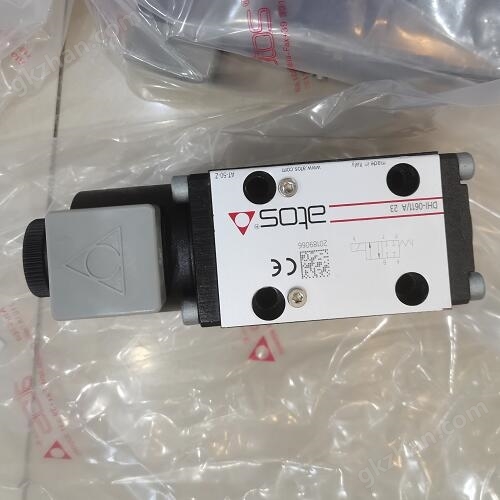
Reference data for ATOS two position four-way reversing valve
NegotiableUpdate on 01/07
- Model
- Nature of the Manufacturer
- Producers
- Product Category
- Place of Origin
Overview
The reference data for the ATOS two position four-way directional valve is that the valve body of the valve is divided into two chambers by a partition, each chamber has three channels, with the inlet in the middle and the outlet at both ends. The valve body is made of carbon steel plate welded structure, which is small in size, light in weight, compact in structure, improves material utilization, shortens production cycle, and reduces costs. The sealing surface is welded with stainless steel, which is rust resistant and corrosion-resistant. The sealing surface is polished and ground after precision machining, with a surface roughness Ra ≤ 0.8 μ m.
Product Details
Reference data for ATOS two position four-way reversing valve
A directional valve is a directional control valve with two or more flow forms and two or more oil ports. It is a valve that enables communication, cutting off, and reversing of hydraulic oil flow, as well as pressure unloading and sequential action control. The direction control valve relies on the relative movement between the valve core and the valve body. There are two types: rotary valve type and slide valve type. According to the number of working positions where the valve core stays in the valve body, it can be divided into two positions, three positions, etc; According to the number of oil circuits connected to the valve body, it can be divided into two-way, three-way, four-way, and four-way; The ways to operate the valve core movement include manual, motorized, electric, hydraulic, electro-hydraulic, and other types.
When working, the drive shaft is rotated by the drive transmission mechanism outside the valve, with a shaking crank arm, to activate the valve plate, so that the working fluid sometimes flows from the left inlet to the lower outlet of the valve, and sometimes changes from the right inlet to the lower outlet, achieving the purpose of periodic flow direction change.
This type of conversion valve has a wide range of applications in petroleum and chemical production, and is most commonly used in synthetic ammonia gasification systems. In addition, directional valves can also be designed as valve disc structures, which are commonly used in situations with lower flow rates. When working, simply rotate the handwheel to change the flow direction of the working fluid through the valve disc.
The directional valve consists of valve body, sealing component, cam, valve stem, handle, and valve cover and other components (Figure 1). The valve is driven by a handle, which drives the valve stem and cam to rotate. The cam has the functions of positioning, driving, and locking the sealing components for opening and closing. The handle rotates counterclockwise, and the two sets of sealing components respectively close the two channels at the lower end under the action of the cam. The two channels at the upper end are respectively connected to the inlet of the pipeline device. On the contrary, the two channels at the upper end are closed, and the two channels at the lower end are connected to the inlet of the pipeline device, achieving non-stop reversing.
The solenoid valve has a sealed chamber with through holes at different positions, each connected to a different oil pipe. The middle of the chamber is a piston, and there are two electromagnets on both sides. The valve body will be attracted to which side when the magnet coil on the other side is energized. By controlling the movement of the valve body, different oil discharge holes can be opened or closed. The oil inlet hole is normally open, and hydraulic oil will enter different oil discharge pipes. Then, the pressure of the oil will push the piston of the oil cylinder, which in turn drives the piston rod, which drives the mechanical device. In this way, the mechanical motion is controlled by controlling the current on and off of the electromagnet.
Atos RZMO-REB-P-NP-010/315
Atos SAGAM-10/10/350/10S
Atos RZGA-010/100/M24
Atos DPHA/M -2711/M 110AC
Atos DHA/M-0713/PA-M
ATOS solenoid valve DHAXS6-0631/2/M-24DC
ATOS DPHE-2713DL9-X 24DC
DHA-0713/M/O 24DC
DHA-0711/M/O 24DC
Reference data for ATOS two position four-way reversing valve
Similar Product Recommend