-
E-mail
18917038407@163.com
-
Phone
18917038407,18918574312,18917074297,18918572467
-
Address
713, No. 6, Lane 99, Jiayong Road, Jiading, Shanghai
Product Categories
Shanghai Qiantuo Trading Co., Ltd
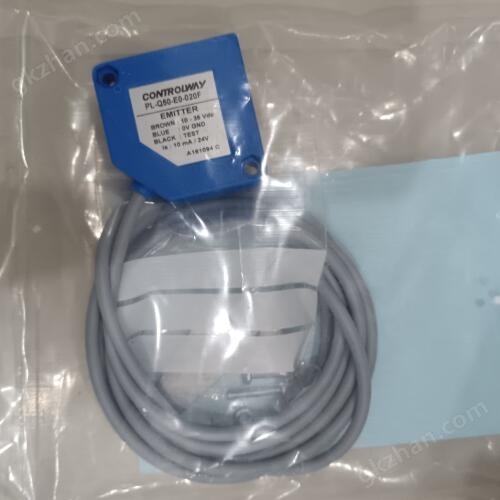
Parameters and characteristics of CONTRINEX photoelectric sensor
NegotiableUpdate on 01/07
- Model
- Nature of the Manufacturer
- Producers
- Product Category
- Place of Origin
Overview
The parameters and characteristics of the CONTRINEX photoelectric sensor include the installation of the emitter and receiver in the same device, with a reflective plate installed in front of it. The photoelectric switch that uses the principle of reflection to achieve photoelectric control is called a reflective plate reflective (or mirror reflective) photoelectric switch. Under normal circumstances, the light emitted by the emitter is reflected back by the reflector and received by the receiver; Once the light path is blocked by the detected object and the receiver cannot receive light, the photoelectric switch will activate and output a switch control signal.
Product Details
Parameters and characteristics of CONTRINEX photoelectric sensor
For reflective photoelectric sensors, they must be used in combination with a projecting and receiving section, and both ends need to be powered; The retro reflective type must be used in combination with a sensor probe and a retro reflective plate; At the same time, users must provide stable power to the sensor. If it is powered by DC, the positive and negative poles must be confirmed. If the positive and negative poles are connected incorrectly, it will result in no output signal.
The transmitter is equipped with a calibration lens, which focuses the light towards the receiver. The receiver's output cable connects this device to a vacuum tube amplifier. There is a small incandescent lamp inside the metal cylinder as the light source, and these small and sturdy incandescent lamp sensors are the prototype of today's photoelectric sensors.
In addition, the structural components of the photoelectric sensor include an emitter plate and optical fibers. A corner reflector is a structurally robust emitting device composed of small triangular cone reflector materials, which can accurately return the light beam from the reflector. It can change the emission angle within the range of 0 to 25 from the optical axis, so that the beam of light almost returns from a single emission line after reflection.
The above reason analysis is based on the consideration of the photoelectric sensor itself. We also need to consider the issue of detecting the position of the object. If the detected object is not in the detection area, such detection is futile. The object to be detected must be within the area that can be detected by the sensor, that is, within the range that can be perceived by the photoelectric sensor. Secondly, it is necessary to consider whether the optical axis of the sensor is aligned. The optical axes of the projection and reception parts of the reflective type must be aligned, and the corresponding probe and reflector parts of the reflective type must be aligned. It is also necessary to consider whether the detected object meets the standard for detecting objects or the minimum detection object standard. The detected object cannot be smaller than the standard for detecting objects, in order to avoid the inability of reflective and reflective types to detect transparent objects well. Reflective types have requirements for the color of the detected object, and the darker the color, the closer the detection distance.
A groove shaped photoelectric device is installed on both sides of a groove with a light emitter and a receiver facing each other. The emitter can emit infrared or visible light, and the light receiver can receive light without obstruction. But when the detected object passes through the slot, the light is blocked and the photoelectric switch is activated. Output a switch control signal to cut off or turn on the load current, thereby completing a control action. The detection distance of slot switches is generally only a few centimeters due to the limitations of the overall structure.
If the light emitter and receiver are separated, the detection distance can be increased. A photoelectric switch composed of a light emitter and a light receiver is called a paired split photoelectric switch, abbreviated as a paired photoelectric switch. Its detection distance can reach several meters or even tens of meters. When in use, install the light emitter and receiver on both sides of the path through which the object passes. When the object passes through, block the light path, and the receiver will activate to output a switch control signal.
The receiver consists of photodiodes, phototransistors, and photovoltaic cells. Photodiodes are currently the most common sensors. The appearance of the photoelectric sensor photodiode is the same as that of a general diode, except that there is a window embedded with glass on its shell for light to enter. In order to increase the light receiving area, the PN junction area is made larger. The photodiode works in reverse bias and is connected in series with the load resistor. When there is no light, it is the same as a normal diode, and the reverse current is very small, which is called the dark current of the photodiode; When illuminated, charge carriers are excited, producing electron hole pairs, known as photocarriers.
Parameters and characteristics of CONTRINEX photoelectric sensor
Similar Product Recommend