-
E-mail
907303965@qq.com
-
Phone
13399553779
-
Address
Anhui Jiwei
Product Categories
Anhui Jiwei Intelligent Equipment Co., Ltd

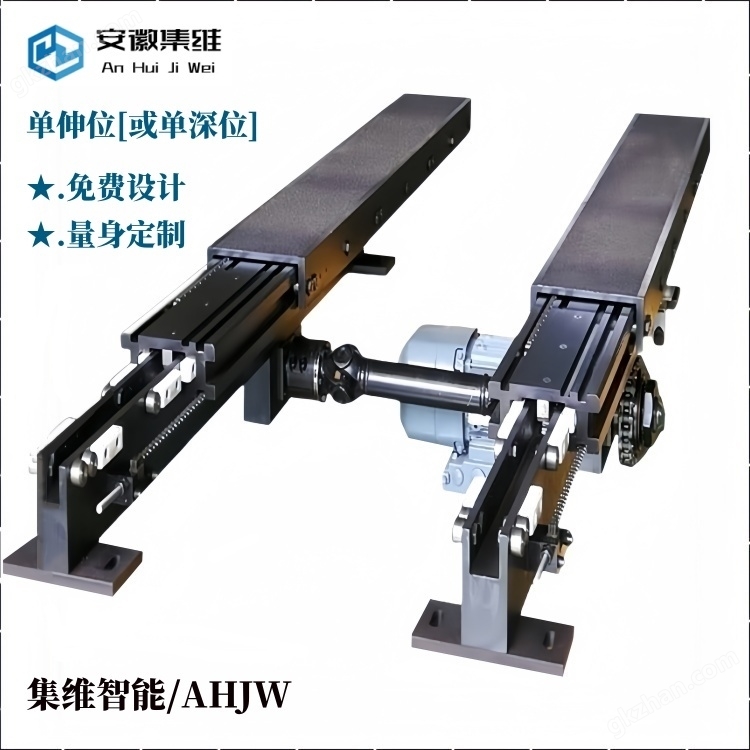


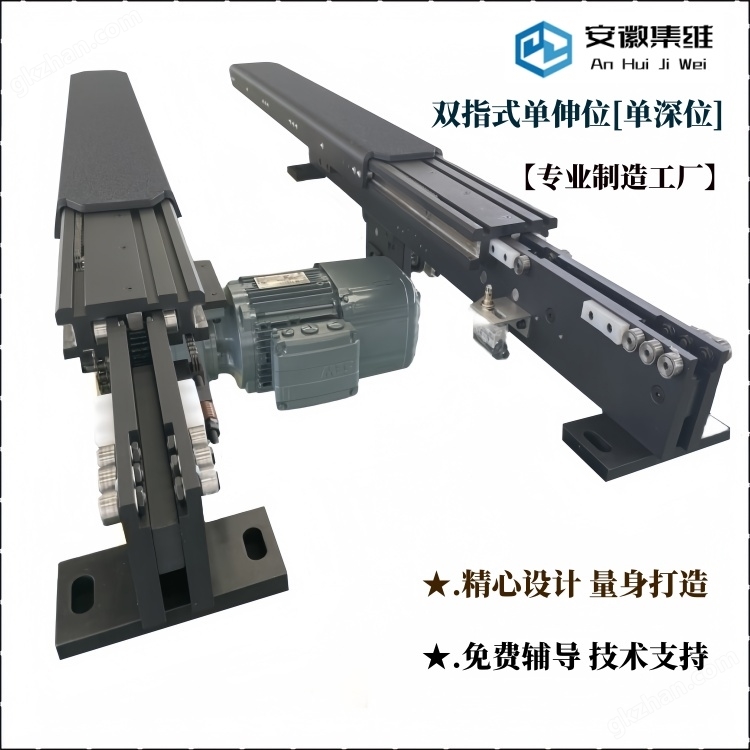
Double row single depth fork
NegotiableUpdate on 01/07
- Model
- Nature of the Manufacturer
- Producers
- Product Category
- Place of Origin
Overview
Double row single depth fork is an efficient storage and retrieval device installed on a stacker crane, characterized by two sets of fork bodies arranged side by side, which can be independently or synchronously controlled (i.e. two sets of "hands"). $r $n Single Depth Position: Serving single depth shelves, where only one pallet is stored in the depth direction of each location, and all pallets face directly towards the aisle without being obstructed by other pallets. The core design goal of $r $n is not to solve the problem of access depth, but to greatly improve the warehouse's inbound and outbound throughput efficiency.
Product Details

1 Detailed explanation and working mode
The meaning and impact of "single depth"
·shelf layoutThe design of the shelves is very simple, with only one pallet depth per compartment. The storage space on one side of the channel holds a pallet, with the back beam or wall of the shelf behind it.
·advantageThe access logic is very simple, and the stacker crane can directly access any pallet without any obstacles. This is the most common and basic form of automated storage.
·局限性The space utilization rate is lower than that of double depth shelves.
2. The core advantages of "dual row" in single depth scenarios
In a single depth layout, due to the lack of obstruction from the inner and outer trays,The entire capability of the 'double row' design is focused on improvingwork efficiencyIts main working mode is as follows:
·
Mode 1: Synchronous Homework (Main Mode)
·
odescriptionTwo rows of forks perform the same action simultaneously and synchronously.
oapplicationThis isDouble row single depth forkThe most advanced application method for Xiao. Stacker crane can be located once and accessed simultaneouslyTwo side by side trays.
oworkflow:
1. The stacker crane runs to the target cargo position height and aligns with itTwo parallel cargo locations.
2. Double row forks extend simultaneously, with the left fork inserted into the bottom of the left pallet and the right fork inserted into the bottom of the right pallet.
3. The fork lifts and carries two pallets, then retracts synchronously.
4. The stacker crane transports two pallets together to the conveyor line or another cargo location.
oadvantage:The throughput has almost doubledEspecially suitable for scenarios with high inbound and outbound traffic, such as production line distribution, e-commerce order batch processing, etc.
·
Mode 2: Independent Homework
·
odescriptionTwo rows of forks can be independently controlled to perform different tasks.
oapplicationDuring a stop of a stacker crane, perform composite operations such as one take, one store, etc.
oworkflow:
1. The stacker carries a pallet that needs to be stored (carried by the right fork) and runs to a cargo location where there are already empty pallets.
2. Fork extended,Left forkFirst, take out the empty pallet from the storage location, and at the same timeRight forkStore the fully loaded pallets in the empty space of the storage location.
3. The fork retracts, with the left fork carrying the empty tray taken out and the right fork idle.
4. The stacker crane can carry empty pallets for the next operation (such as delivering to the designated location).
oadvantageOptimized the work cycle, reduced idle and ineffective actions of the stacker crane, and significantly improved operational efficiency.
·
Mode 3: Single Fork Homework
·
odescriptionWhen only a single pallet needs to be processed, only one column of forks can be used while the other column remains on standby.
oapplicationHandle regular access tasks for a single pallet.
oadvantageProvides operational flexibility without compromising basic functionality.
II andThe key difference between "double row double depth" fork
For a clearer understanding, we will compare it with more complex dual depth models:
feature |
Double row single depth fork |
Double row double depth fork |
shelf layout |
Single row tray, facing directly towards the aisle |
Double row tray, arranged in front and back |
Core solution objectives |
improve efficiency(Throughput) |
Balancing space utilization and efficiency |
key technology |
Parallel access and composite operations |
Frog jumping operationParallel access, composite operation |
space utilization |
standard |
ji高 |
Control complexity |
relatively low |
Very high (requires precise coordination of double forks for transposition) |
cost |
Higher (due to double row design) |
Highest (Double Row)+Longer fork body+more complex control |
Applicable scenarios |
A warehouse that pursues high inbound and outbound capabilities |
A warehouse that pursues both high-density storage and high access efficiency |
III Advantages and Applicable Scenarios
advantage
1. jiHigh throughput efficiencyDual operation cycle maximizes the unit time access capability of the stacker crane.
2. Operational flexibilitySupports both parallel and independent tasks, and can adapt to complex logistics scheduling requirements.
3. Reduce the number of devicesUnder the same inventory capacity, it is possible to reduce the number of stacker cranes required, thereby lowering the overall system cost.
4. Simplify warehouse location managementDue to being a single depth location with no cargo obstruction issues, warehouse management and scheduling strategies are relatively simpler compared to dual depth locations.
Applicable scenarios
·High speed sorting centerRegional distribution centers in industries such as express delivery and e-commerce require fast and large-scale processing of goods.
·Production line deliveryProvide efficient material distribution for automated production lines to meet JIT (Just in Time) production requirements.
·Warehouse with throughput priorityWhen the warehouse space is sufficient, but operational efficiency is the core competitiveness.
·Industries with relatively single types of goods and high traffic volumeIndustries such as beverages, food, fast-moving consumer goods, etc.
summary
Double row single depth forkis a kind ofGuided by efficiencyHigh performance equipment. It achieves nearly doubled operational capacity on traditional single depth shelf layouts through the design of dual row parallel work. Although it sacrifices the spatial density advantage of dual deep layout, it is a viable choice for applications that pursue high throughput speed. Choosing it means choosingA 'speed first' warehousing and logistics solution.


