-
E-mail
907303965@qq.com
-
Phone
13399553779
-
Address
Anhui Jiwei
Product Categories
Anhui Jiwei Intelligent Equipment Co., Ltd
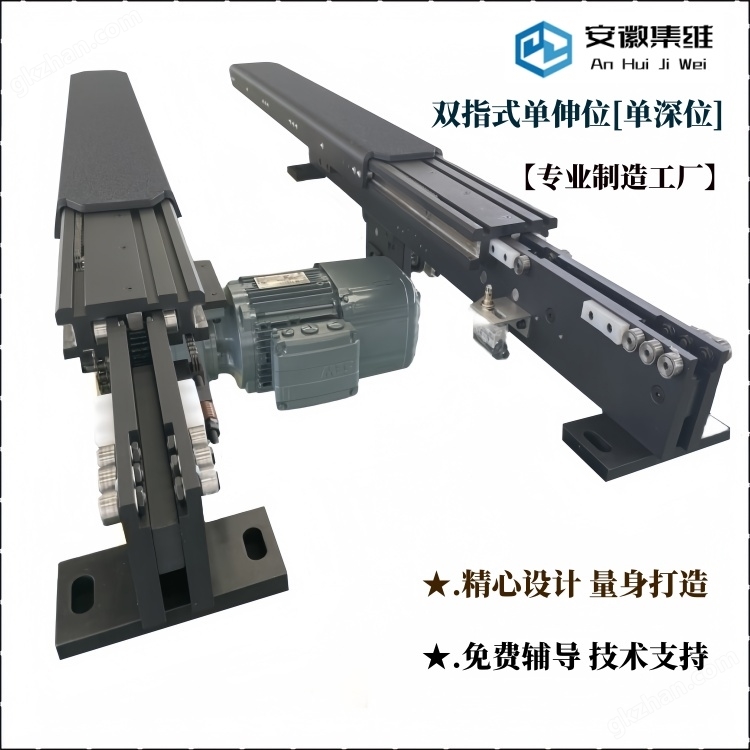


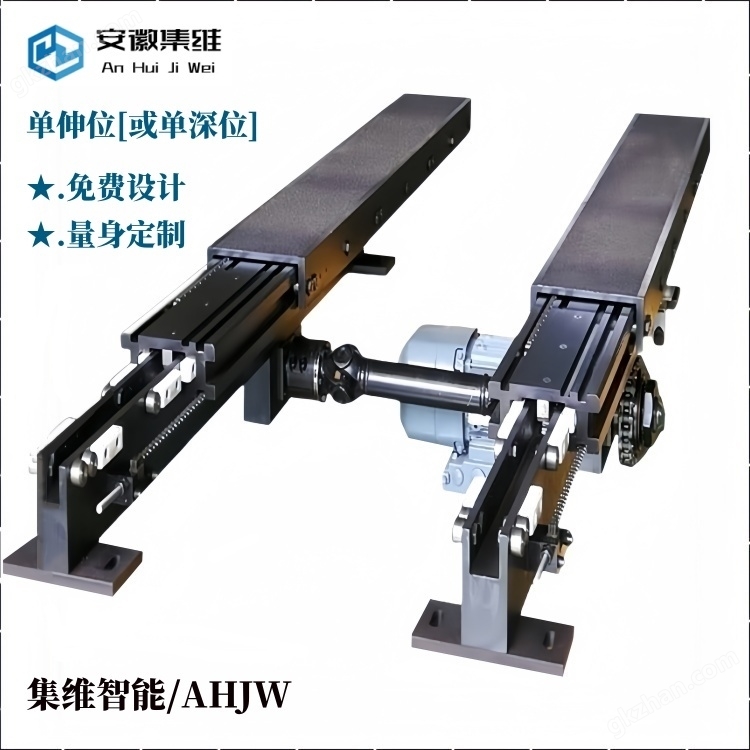
Double row double extension telescopic mechanism
NegotiableUpdate on 01/07
- Model
- Nature of the Manufacturer
- Producers
- Product Category
- Place of Origin
Overview
The double row double extension telescopic mechanism is the foundation of the mechanism. You can imagine it as an advanced, structurally robust 'telescopic fork'.
Product Details

1、 Core concept decomposition
1. Dual extension telescopic mechanism
This is the foundation of the institution. You can imagine it as a high-end, structurally sturdy oneThe telescopic fork.
·basic structureUsually composed of three levels - fixed fork, middle fork, and upper fork.
1. Fixed forkDirectly installed on the lifting platform of the stacker crane through a bracket is the foundation of the entire mechanism.
2. Middle forkUnder the drive of the driving device (usually a motor paired with a chain or gear), the first layer extends outward from the fixed fork.
3. Up forkExtend the second layer outward from the middle fork. Through these two levels of extension, the total travel of the fork can be very long, allowing it to reach the goods deep in the shelves.
·working principle:
1. in positionThe stacker crane, equipped with a telescopic mechanism, runs in front of the target cargo compartment and comes to a precise stop.
2. First level extensionThe middle fork extends first, driving the upper fork to move together.
3. Second level extensionAfter the middle fork is in place, the upper fork continues to extend forward from the middle fork until it supports or inserts into the bottom of the tray.
4. pick up/Release goodsLift the platform slightly or slightly to complete the picking and placing action.
5. retractThe process is opposite, the upper fork first retracts into the middle fork, and then the middle fork retracts into the fixed fork together with the upper fork.
·purpose: ResolveDeep shelvingAccess to. The single position fork cannot reach the cargo position far away from the aisle, and the double position design solves this problem.
2. Double row layout
This is inAn efficiency multiplier on top of the "dual extension" function.
·basic structureOn the lifting platform of the stacker crane,Install two sets of WAN fully independent dual extension telescopic mechanisms side by sideOne set is responsible for the operation of the left shelf, and the other set is responsible for the operation of the right shelf.
·Core strengths:No need to turn around to serve the shelves on both sidesThis is the fundamental difference from a single telescopic mechanism.
oTraditional standalone stacker craneAfter picking up the goods from the left shelf, if you want to access the goods on the right shelf, the stacker crane must carry the goods to the position of the right shelf, or return to the alley entrance to put down the goods first, and then go to the right shelf to pick up the goods. This process will result in empty travel and lower efficiency.
oDouble row double extension stacker craneIt can take a pallet from a workstation and run it directly in the aisle, storing another pallet on the other side shelf without the need for a U-turn. This greatly reduces the idle running time and commutation time.
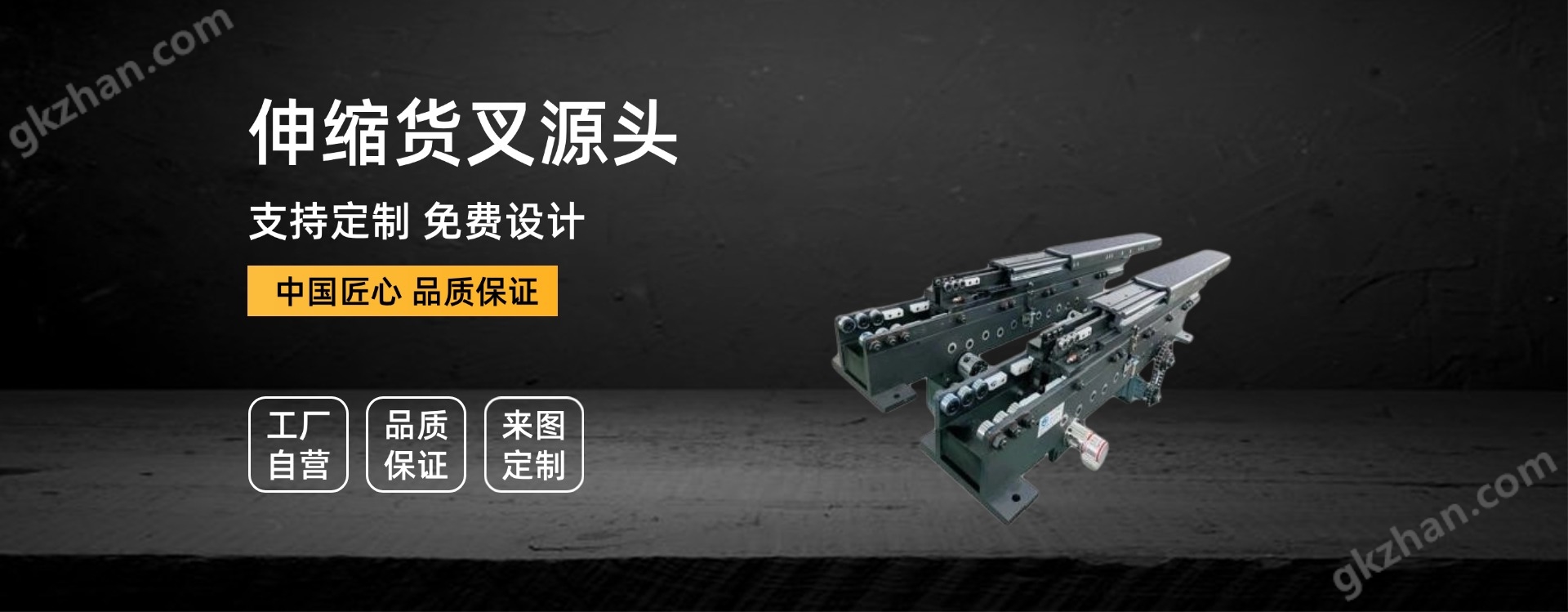
2、 Overall workflow and advantages
Based on the above two points, the workflow of a typical double row double extension stacker crane is as follows:
1. Initial stateThe stacker crane is located on the storage platform at the entrance of the tunnel. Assuming that the left telescopic fork already carries a pallet A that needs to be stored (the target location is deep in the left shelf), and the right telescopic fork is empty.
2. Running and left side jobThe stacker carries pallet A and runs to the left target cargo compartment.Double extension telescopic mechanism on the left sideAction, move the trayA is fed into the deep cargo compartment and then retracted.
3. Directly proceed with the homework on the right side: Stacker craneNo need to move or turn around, start directlyDouble extension telescopic mechanism on the right sideTake out a pallet that needs to be shipped from the deep compartment on the right shelfB。
4. Return and UnloadingThe stacker crane now carries pallets on both sides of the telescopic forks (empty on the left and pallet B on the right), and runs back to the exit platform of the aisle to unload pallet B.
Summary of core advantages:
·Extremely high space utilization rateSupport the use of deeper (double extension) and higher (through stacker crane lifting) shelves to maximize the three-dimensional space of the warehouse.
·AndHigh homework efficiency: ImplementedComposite homework cycleOne tunnel trip can be completedActions such as "left side storage+right side storage" or "left side storage+right side storage" eliminate empty travel and increase efficiency by 30% -50% or even higher than single telescopic stacker cranes.
·Enhanced system flexibilitySpecially suitable for logistics centers with high turnover rates and frequent cross distribution needs.
3、 Main application scenarios
This type of organization is a symbol of Gao's automated warehousing system, mainly used for:
·Large distributed warehousing center(such as central warehouses for e-commerce, home appliances, and manufacturing industries).
·Cold chain warehouse(Reduce door opening time and stacker crane operation time, save energy and reduce consumption).
·Industries with high requirements for inventory efficiencySuch as tobacco, medicine, automotive parts, etc.
4、 Technical Challenges and Considerations
Double row double extension telescopic mechanismAlthough the advantages are obvious, this design also brings higher complexity and cost:
·High control accuracy requirementsTwo sets of mechanisms move independently and require very precise synchronization control and positioning technology to prevent collisions with shelves.
·Complex structure and high self weightThe dual mechanism means more steel and drive components, which puts higher demands on the main structure (such as beams and columns) and drive system of the stacker crane.
·High initial investment and maintenance costsThe equipment itself is expensive and has two sets of moving parts, which increases the maintenance workload and cost accordingly.
·High precision requirements for the manufacturing of shelves and palletsAny small deviation may be amplified during dual extension deep access, leading to malfunctions.
summary
Double row double extension telescopic mechanismIt is a typical representative of the development of automated warehousing technology towards high efficiency and density. It passes throughThe "dual extension position" solves the problem of space utilization, and also solves the problem of work efficiency through the "dual row" layout. It is one of the core technical equipment for modern intelligent warehouses to achieve high-throughput and high-density storage. To choose whether to adopt this technology, it is necessary toStorage requirements, efficiency goals, investment budget, and maintenance capabilitiesMake a comprehensive balance between them.


