-
E-mail
1601172727@qq.com
-
Phone
13263198702
-
Address
No. 11 Yingbin South Road, Huairou District, Beijing
Product Categories
Beijing Jerry Hengda Technology Co., Ltd
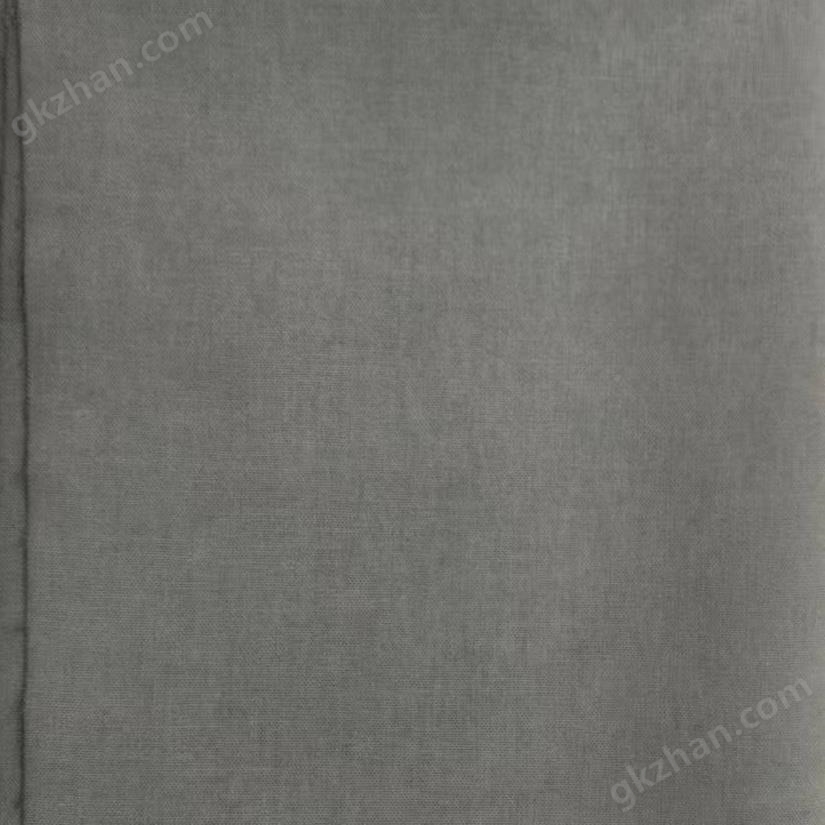


Standard stain cloth, carbon black protein, sebum stain cloth
NegotiableUpdate on 01/07
- Model
- Nature of the Manufacturer
- Producers
- Product Category
- Place of Origin
Overview
According to the requirements of GB/T 13174-2021 detergent performance testing, select the required JB series test piece varieties for standard stain cloth carbon black protein sebum stain cloth. Cut the contaminated cloth used for measurement into test pieces and match them into six groups with similar average chromaticity according to categories (to eliminate differences between different batches of contaminated cloth, the six groups of test pieces should be obtained by cutting the same JB series contaminated cloth as much as possible).
Product Details
Standard stain cloth, carbon black protein, sebum stain cloth
Consumables for vertical decontamination measuring machine with contaminated cloth
1、 Preparation of contaminated cloth test piece
1. According to the requirements of GB/T 13174-2021 detergent performance testing, select the required JB series test piece varieties. Cut the contaminated cloth used for measurement into test pieces and match them into six groups with similar average chromaticity according to categories (to eliminate differences between different batches of contaminated cloth, the six groups of test pieces should be obtained by cutting the same JB series contaminated cloth as much as possible). Each group should have 4 or more JB test pieces for stain resistance testing, and 6 JB-00 test pieces for whiteness retention or cyclic washing performance testing. At the same time, the test pieces should be numbered and recorded, and each group of test pieces should be used for performance testing of one sample.
Note:
a: Each set of test pieces is used for performance testing of one sample. The required number of test piece groups is determined based on the number of products measured and the model of the cleaning machine. Six sets of test pieces are the maximum amount for one vehicle testing of common models of vertical cleaning machines.
b: In the cleaning and washing test, according to the different varieties of JB series test pieces, the cleaning power of detergents can be tested separately for different stains, and the test results can also be obtained by combining multiple stains to test the cleaning power together, and then comparing the test results separately. The test conditions should be specified in the test result report.
2. According to the testing purpose, select JB series dirt cloth for the determination of its cleaning power or cyclic washing performance. Cut the dirty cloth into a certain size of circle or square before use (for example, JB01/JB-02/JB-03 are circles with a diameter of 6cm, and JB-00 are squares with a diameter of 8cm x 8cm), which are called test pieces. The uneven edges around each dirty cloth can be cut off. For test pieces that require multiple repeated washing tests, to avoid a large amount of thread detachment during washing, it is necessary to lock the edges with full cotton thread in advance if necessary.
2、 Production of dirty cloth
A manually dyed cloth made by processing a specified type of stain on a white cotton cloth through a certain procedure, used to determine the ability of detergent to remove such stains, and to determine the type of stain based on the type of stain.
Production of JB-00
Cut the cotton white cloth into rectangular pieces of a certain size along the warp and weft lines, add them to a drum washing machine, wash them with tap water according to the standard washing mode of the washing machine, spin dry, and then heat and wash them with deionized water for 30 minutes at a washing temperature of about 60 ℃. After spin dry, flatten and dry them with an ironing machine or electric iron, and cut them into a certain size (such as 27cmX44cm). For the next stage of preparing dirty cloth or testing the performance of cyclic washing.
JB-01 Dirty Cloth Production
Adjust the rolling mill pressure to 0.3MPa. Adjust the waste liquid tank and filter the JB-W1 waste liquid with a 100m filter cloth before pouring it into the rolling mill waste liquid tank Soak and press JB-00 white cotton cloth once, then reverse soak and press the stained cloth once, hang and dry it.
JB-02 dirty cloth production
Weigh 6.7g of Arabic tree gum powder, add a small amount of water to wet it, and place it on a water bath to heat and dissolve. Add 4.5g of carbon black Grind for about 2 minutes and set aside for later use.
Weigh 38.6g of milk powder, add 120mL of water and stir evenly. Then add the mixture to the above solution and add water to make the total volume 356ml.
Take a beaker and put 70g of egg mixture, including 42g of egg white and 28g of egg yolk. Mix 356ml of water evenly and set aside. Homogenize the solution at a speed of about 10000r/min using an emulsifier. After 20 minutes, add egg mixture and continue to emulsify for 40 minutes to prepare a dye stain.
Adjust the rolling mill pressure to 0.3 MPa, adjust the waste liquid tank, and filter the prepared waste liquid into the rolling mill waste liquid tank using two layers of gauze Take 1B-00 white cotton cloth for pad dyeing, hang and dry it.
Standard stain cloth, carbon black protein, sebum stain cloth
2、 Standard contaminated cloth and standard reagents
category |
Specifications |
Minimum Order Quantity (MOQ) |
Standard white clothJB-00(GB13174-2021) |
27cm * 44cm/block |
10 yuan/package |
Carbon black pollution clothJB-01(GB13174-2021) |
27cm * 44cm/block |
10 yuan/package |
Protein contaminated clothJB-02(GB13174-2021) |
27cm * 44cm/block |
10 yuan/package |
Sebum contaminated clothJB-03(GB13174-2021) |
27cm * 44cm/block |
10 yuan/package |
JB-04 Carotenoid Pig Oil Pollution(GB/T42239.2-2022) |
6cm * 6cm/block |
100 yuan/package |
JB-04 Edible oil contaminated cloth(GB/T13174-2008) |
7cm * 7cm/block |
200 yuan/package |
JB-05(GB/T13174-2008) |
27cm * 44cm/block |
10 yuan/package |
Polyester cloth (tested for electrostatic resistance) |
1m*1.45m |
2 meters |
K12 |
30g/bottle |
1 bottle |
Phosphate free standard laundry detergent(GB/T13174-2021) |
0.5kg/bottle |
1 bottle |
Standard laundry detergent(GB/T13174-2021) |
0.5kg/bottle |
1 bottle |
Standard tableware detergent(GB/T9985-2022) |
0.5kg/bottle |
1 bottle |
Mixed oil pollution(GB/T9985-2022) |
0.5kg/bottle |
1 bottle |
33 # Fluorescent Whitening Agent |
50g/bottle |
1 bottle |
Aseptic pigskin(GB/T2738-2023) |
7.5cm * 10cm (approximately)) |
1 piece |
Carbon black wastewater for cyclic washing(GB13174-2021) |
400ml/bottle |
1 bottle |
Similar Product Recommend