-
Phone
15921165535
-
Address
No. 418 Huajing Road, Shanzhong Science and Technology Park, Waigaoqiao Free Trade Zone, Pudong New Area, Shanghai
Product Categories
Duzhi Instrument (Shanghai) Co., Ltd
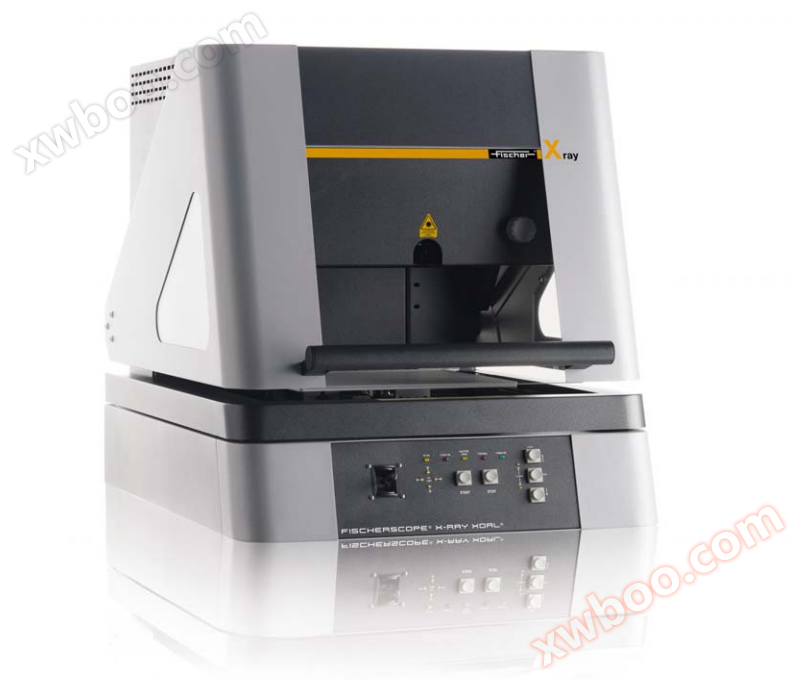
Fischer XDAL 237 Fluorescence Ray Coating Thickness Gauge
NegotiableUpdate on 02/14
- Model
- Nature of the Manufacturer
- Producers
- Product Category
- Place of Origin
Overview
The Fisher XDAL 237 X-ray fluorescence measuring instrument is equipped with a fast programmable XY platform and Z-axis, which can automatically measure the thickness of thin coatings and perform material analysis.
Product Details
Product description
The FISCHERSCOPE X-RAY XDAL instrument can be used to measure the lead content in SnPb solder layers. In this application, the first step is to accurately measure the thickness of SnPb in order to analyze the content of Pb. According to the high reliability requirements in the aerospace industry, in order to avoid the occurrence of cracks, the Pb content in the alloy must be at least 3% or higher. On the other hand, for electronic products used in daily life, according to the RoHS directive, the content of Pb in solder should not exceed 1000ppm. Although the lower limit of Pb measurement by XDAL depends on the thickness of the SnPb coating, in general, the lower limit of XDAL measurement is low enough to easily meet the above measurement requirements.
With motor drive (optional) and top-down measurement direction, the XDL series measuring instruments are capable of automated batch testing. Provide multiple models of X-ray sources, filters, collimators, and detectors in different combinations, so that suitable X-ray instruments can be selected according to different measurement needs. In terms of design, the FISCHERSCOPE XRAY XDAL instrument corresponds to the XDLM instrument. The difference lies in the type of detector used. On XDAL, a Peltier cooled silicon PIN detector was used, resulting in a much better energy resolution than the proportional counter used in XDLM. Therefore, this instrument is suitable for general material analysis, trace element analysis, and measurement of thin coating thickness.
|
PCB assembly: lead content test |
High speed steel drill bit: TiN/Fe |
|
High reliability: Measuring Pb content (>3%) in electronic components
|
Tool: TiN/Fe |


characteristic:
X-ray fluorescence instruments can be equipped with multiple hardware combinations to complete various measurement tasks.Due to the adjustable measurement distance (up to 80mm), it is suitable for testing pre installed components. Components of circuit boards or cavity structures
Automated batch testing can be achieved through a programmable XY workbench and Z-axis (optional)
The use of silicon drift detectors with high energy resolution is highly suitable for measuring ultra-thin coatings (XDAL devices)
Coating thickness measurement:
Measurement of Coatings on Large and Flexible Circuit BoardsThin conductive and/or isolation layers on the circuit board
Coating on products with complex geometric shapes
Chromium plating, such as plastic products treated with decorative chrome plating
Thickness measurement of hard coatings such as chromium nitride (CrN), titanium nitride (TiN), or titanium carbide nitride (TiCN)
Material analysis:
Analysis of Electroplating Bath SolutionAnalysis of Functional Coatings in the Electronics and Semiconductor Industries
Application example:
The FISCHERSCOPE X-RAY XDAL instrument can be used to measure the lead content in SnPb solder layers. In this application, the first step is to accurately measure the thickness of SnPb in order to analyze the content of Pb. According to the high reliability requirements in the aerospace industry, in order to avoid the occurrence of cracks, the Pb content in the alloy must be at least 3% or higher. On the other hand, for electronic products used in daily life, according to the RoHS directive, the content of Pb in solder should not exceed 1000ppm. Although the lower limit of Pb content measurement by XDAL depends on the thickness of SnPb coating, in general, the lower limit of XDAL measurement is low enough to easily meet the above measurement requirements.
Similar Product Recommend


