-
E-mail
1075373397@qq.com
-
Phone
13358134227
-
Address
No. 6 Zhenwu Porcelain Factory Road, Jiangdu District
Product Categories
Yangzhou Junping Testing Machinery Co., Ltd


Electric winding testing machine
NegotiableUpdate on 01/07
- Model
- Nature of the Manufacturer
- Producers
- Product Category
- Place of Origin
Overview
Complies with standards such as GB/T2951.14.8.1-2008, GB2099-2008, VDE0472, and IEC884-1, and is used in conjunction with low-temperature chambers. Scope of application: Used to assess and determine the performance of circular cables or circular insulated wire cores at low temperatures.
Product Details
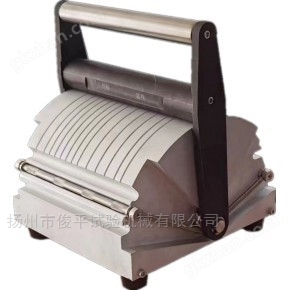
JP-6973Electric low-temperature winding test device
Test standard:comply withGB/T2951.14.8.1-2008TheGB2099-2008、VDE0472 and IEC884-1 standards are used in conjunction with low-temperature chambers.
Scope of application: Used to assess and determine the performance of circular cables or circular insulated wire cores at low temperatures.
Main parameters:
1、Low temperature winding sample diameter:Ф2.5~Ф12.5mm
2、Winding rod diameter:F4、5. 6,7,8,10,12,14,16,18,20,24,38mm共13branch
3、Wire harness:Two pieces each of diameter 3.5, 6, 10, 12, and 16mm
4、Number of twists and turns on the sample:2-10 circles(Can be set)
5、This series of devices are all made of stainless steel
Test conditions: The diameter of the spindle is equal to the diameter of the sample line4-5 times, the cooling temperature and test temperature should comply with the provisions of the PVC test in the cable standard.
Test Method Description
1. The test equipment with installed samples should be cooled at the temperature specified in the relevant product standards before and during the test. The cooling time should not be less than 16 hours, and the 16 hour cooling cycle includes the time required to cool the test equipment.
2. If the testing equipment has been pre cooled, the cooling time can be shortened, but not less than 4 hours. When both the testing equipment and the sample have been pre cooled, the sample device still needs to be cooled on the spindle for another hour.
3. During the experiment, first remove a plug from the low-temperature chamber and proceed with the operationmotorConnected to the winding core shaft, with eachcircleRotate evenly for five secondsThe number of rotations should meet the standard requirements The sample is wound on the core shaft and neatly wound into a tight spiral on the shaft.
4. For parallel flexible wires, the diameter of the core shaft should be based on the size of the short side of the sample, with the short side wrapped around the shaft and the axis of the short side perpendicular to the core shaft.