High-Quality Polyacrylamide Export: Advanced Water Treatment & Mining Solutions from Shouxin
10,30,2026 5 views


11,04,20260From:
In sectors such as modern industrial water treatment, papermaking, mining, and oilfield chemistry, polyacrylamide (PAM)—a key water-soluble linear polymeric flocculant—plays a critical role; its performance directly dictates the efficiency of solid-liquid separation and the ultimate operational costs. However, throughout the century-long history of polyacrylamide—which dates back to its initial synthesis by the French scientist Moureu in 1893—the industry has been consistently plagued by a persistent challenge: inconsistent quality between production batches. Due to limitations in formulations, fluctuations in raw material quality, and inherent flaws in traditional manufacturing processes, many products exhibit significant performance variability in practical applications, posing serious operational risks to end-user enterprises.
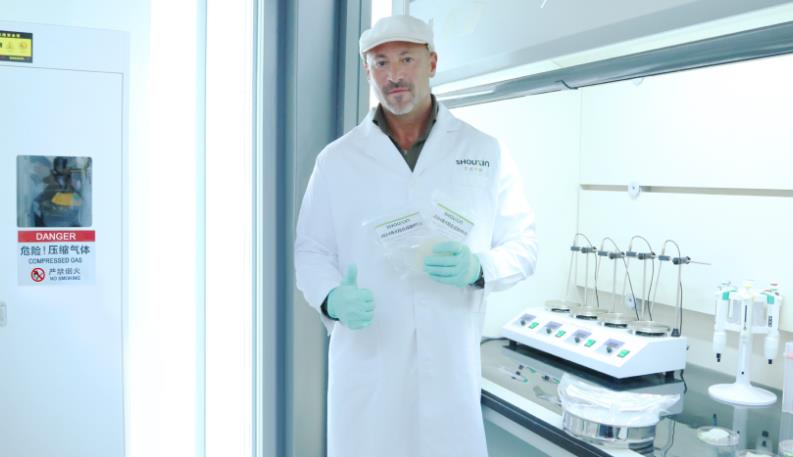
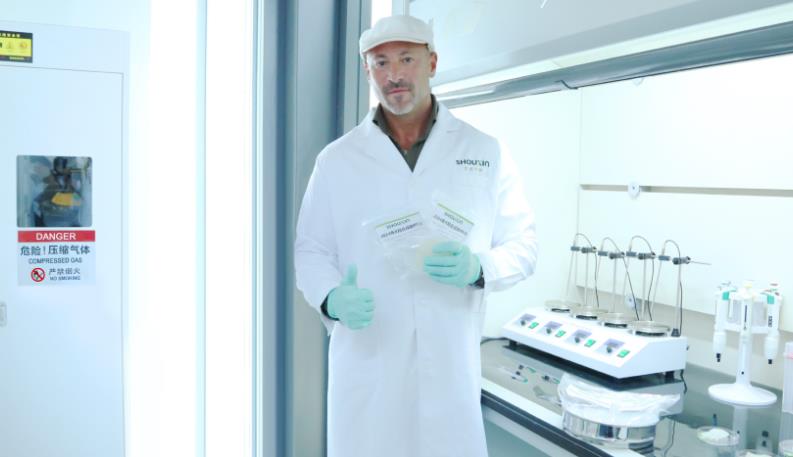
As a pioneer in delivering consistent, high-quality polyacrylamide, Guangdong Shouxin Polymer Synthesis Science Co., Ltd. has collaborated with top-tier domestic and international research teams—including Academician Shen Yinchu of the Chinese Academy of Engineering (often hailed as the "father of polyacrylamide" in China) and Phil S. Baran, a member of the U.S. National Academy of Sciences. By focusing on the optimization of molecular structures and implementing rigorous, end-to-end process oversight, the company has effectively brought an end to the "era of instability" that long characterized the traditional PAM industry.
I. Molecular Structure Optimization: The Microscopic Foundation for Stable Performance The flocculation mechanism of polyacrylamide is mainly based on charge neutralization and efficient bridging of polymer chains. Whether anionic (APAM), cationic (CPAM), nonionic (NPAM), or amphoteric (MPAM), the molecular weight and the distribution of ionicity (or degree of hydrolysis) have a decisive impact on the final floc compactness, settling velocity, and filter cake moisture content.
Traditional processes often result in inconsistent polymer chain lengths and uneven distribution of active groups due to insufficient control over conversion rate and polymerization uniformity. Shouxin, through an international R&D philosophy and in-depth industry-academia-research cooperation (such as jointly establishing laboratories with universities like South China University of Technology and Chongqing University), has achieved a revolutionary upgrade in microscopic molecular design:
Precise Control of Copolymerization Ratio: Ensuring uniform distribution of active groups on the main chain, enabling rapid neutralization of surface charges on suspended particles and the formation of dense, shear-resistant "large flocs" when facing complex water qualities.
Breakthroughs in emulsion and water dispersion technologies: For example, emulsion-type PAM developed using advanced emulsification processes and ultra-fast cell disruption technology not only has a high conversion rate and excellent dissolution speed, but also maintains a neutral pH value, clearing technical obstacles for the subsequent resource utilization of sludge (such as composting and brick making).
II. End-to-End Quality Oversight System: Dual-Layer Control from Source to Warehouse. Achieving "zero fluctuation" on a macro level requires a rigorous, closed-loop industrial oversight system. Breaking free from the traditional manufacturing focus on minimizing production costs, Shouxin has established a four-dimensional, integrated quality control framework:
Strict Raw Material Control: Stringent entry standards are applied to core monomers and additives, eliminating the risk of impurities interfering with the degree of polymerization or ionicity at the very source. Formula Development Philosophy: Product formulations are developed with "consistent quality" as the primary objective, rather than compromising quality to reduce costs.
Dynamic Manufacturing Process Oversight: Precise, real-time control over polymerization temperatures, initiator concentrations, and reaction durations ensures that the molecular weight distribution curve remains highly consistent across every batch.
Dual-Layer Inspection for Warehousing: A rigorous, two-tier inspection mechanism is enforced during the entry and exit of finished products, guaranteeing that any product failing to meet standards never reaches the market. These exacting standards have earned Shouxin the "Best Quality Consistency Award" from the National Functional Polymer Industry Association for many consecutive years, as well as the "Exclusive Brand Award for Ten Years of Sustained Quality Consistency in China’s Polyacrylamide Industry (2015–2025)."
III. The Decisive Advantage of Consistent Quality: Reducing Hidden Costs
In industrial applications, the procurement cost of PAM (polyacrylamide) agents often represents only a fraction of the total operational cost. Inconsistent product quality can trigger a "domino effect" of negative consequences:
Waste of Reagents and Labor: Batch-to-batch variability necessitates frequent manual intervention, sampling, laboratory testing, and parameter recalibration on-site.
Equipment Wear and Risk of Operational Stoppage: Suboptimal performance places excessive strain on dewatering equipment and accelerates the wear of filter media. Furthermore, failure to meet effluent discharge standards can lead to environmental regulatory penalties or even forced production shutdowns.
By adopting highly stable, consistent PAM products, enterprises can effectively eliminate systemic fluctuations, driving a significant reduction in total operational costs—by as much as 20% to 50%. This underscores a fundamental industrial principle: "Only through high consistency can one sustain high-level development."