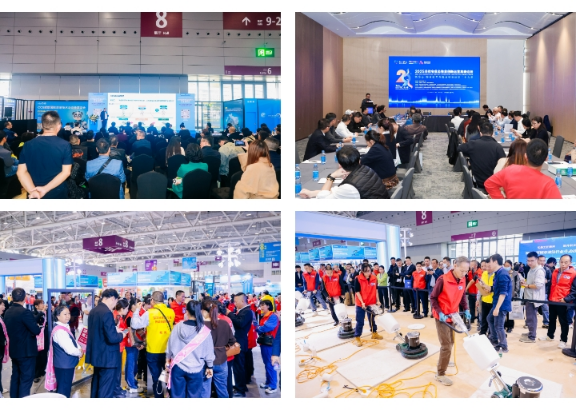
AI Empowers and Ignites a New Future with Intelligence. On August 21st, the 10th North China Manufacturing Industry CIO Seminar in 2026 was successfully held in Beijing, co hosted by Qiguan Information and Feiyu Business. This summit focuses on the deep integration of AI technology and manufacturing industry, bringing together nearly a hundred enterprise CIOs, IT directors, and intelligent manufacturing leaders from multiple fields such as metallurgy, chemical engineering, photovoltaics, aviation, and equipment manufacturing to conduct in-depth discussions on core issues such as smart factory construction, industrial intelligent agent landing, and trusted AI scale application, providing practical paths and solutions for the digital upgrading of the manufacturing industry in North China.
Morning themed forum
Topic:AI speed regulation and manufacturing rhythm——Find the resonance frequency between the technological frenzy and the slow industrial variables
Morning host guest: Li Mu, CIO of Shandong Aluminum Industry Group
The morning session of this summit was hosted by Mr. Li Mu, CIO of Shandong Aluminum Industry Group. As a frontline practitioner of digitalization in the manufacturing industry, he took "AI speed regulation and manufacturing rhythm" as the core thread, connecting multi-dimensional issues such as intelligent factory construction, trustworthy AI landing, and intelligent agent governance, guiding the entire audience to find resonance points between technological iteration and industrial rhythm.
Opening Speech: Li Qilong, Project Director of Qiguan Information
Mr. Li Qilong, the project director of Qiguan Information, first delivered an opening speech for the conference and officially kicked off the 10th North China Manufacturing Industry CIO Seminar in 2026. In addition, Mr. Li introduced in his speech the three main businesses of Qiguan Information: summit planning and service, intermediary business matching, and conference check-in solutions. He focused on the future conference arrangements of Qiguan Information, the service model of intermediary business, and the self-developed check-in system, which greatly improves the complex process of traditional conference check-in.
Guest speaker: Wen Xinrong, Secretary General of the Digital Work Committee of China Information Association Group
SharecontentReflection on the Implementation of AI based Intelligent Factories in the Metallurgical Industry
Mr. Wen Xinrong, Secretary General of the Digitalization Working Committee of the China Information Association Group, shares practical reflections from an ontological perspective on the construction of metallurgical intelligent factories, based on over 30 years of experience in automation and digitalization in non-ferrous metallurgy. He stated that AI has become the core technology support of Industry 4.0, and the industry is undergoing systematic changes. Manufacturing enterprises need to follow the path of "information technology supplementation, digital follow-up, and intelligent overtaking", and promote the three modernizations in parallel. He proposed to solidify the foundation of intelligent factories with ontology, improve the accuracy of industrial AI through semantic alignment and clear rules, and connect the collaborative logic of entities, virtual entities, and human bodies. He emphasized that the implementation needs to adhere to the three core principles of leading by the leader, value priority, and technological maturity.
Guest speaker: Bian Leming, Solution Expert of Hehe Information Intelligent Solution Division
Sharecontent:Data Foundation · Document Intelligence: AI Infra Builds Enterprise Trustworthiness, AI Scale Implementation
Mr. Bian Leming, a solution expert from the Intelligent Solutions Division of Hehe Information, will share on the theme of "Data Foundation and Document Intelligence". He proposed that the implementation of AI in the manufacturing industry requires strict requirements for data credibility, ensuring the triple credibility of input sources, judgment criteria, and execution impact. Its solution is built around four dimensions: intelligent document parsing, commercial big data, business and financial rules engine, and skill encapsulation. It relies on high-precision multimodal parsing technology to solve the problem of complex layout recognition, adopts the "size model layered routing" mode to reduce costs and improve efficiency, and combines Qixin's data capabilities to cover scenarios such as supplier due diligence and risk control, laying a solid data foundation for the large-scale implementation of trusted AI in manufacturing enterprises.
Guest speaker: Jin Xinyu, Senior Solution Architect at Ikrod
SharecontentFrom usage to governance: MAIAH builds the intelligent agent center of manufacturing enterprises
Mr. Jin Xinyu, a senior solution architect at Ikrod, will share about the enterprise level multi-agent management center MAIAH. He proposed that AI is evolving from a single dialogue and process tool to multi-agent collaboration. Enterprises generally face pain points such as fragmented AI tools, difficult security control, opaque costs, and uneven output quality. The core competitiveness of the industry in the future lies in the operational capabilities of large-scale agents. The MAIAH platform is based on the core concepts of unified entrance, task orientation, and controllability. It has built a three-layer architecture consisting of usage layer, organizational layer, and governance layer, relying on the Amazon Web Services platform to cover agent access, permission governance, cost monitoring, security protection, and other capabilities. It has been implemented in scenarios such as Hong Kong MTR equipment operation and maintenance, and intelligent customer service for automotive service providers, achieving a dual improvement in operation and maintenance efficiency and business response.
Sharing guests:Vice General Manager of Foxit Software Document Business Unit——Guan Peng
SharecontentHow does Foxit Zhixin TidaCaw support the integration of automation and information technology in the manufacturing industry, with "documents as databases"
Mr. Guan Peng, Deputy General Manager of Foxit Software Document Business Unit, takes "document as database" as the core concept and breaks down the core obstacles of the integration of manufacturing and industrialization. He stated that a large number of key semantics, such as equipment manuals, inspection records, and operation manuals, are accumulated in the documents, causing semantic gaps between automation and informatization levels, and increasing information latency step by step. Foxit relies on intelligent tag sorting, multi tool matrix adaptation, confidence management, and flexible process orchestration capabilities to achieve structured distillation and precise extraction of complex documents. It can support production scenarios such as fault library construction and standard work package generation, connect semantic penetration links, and empower the digital upgrading of the manufacturing industry.
Guest speaker: Yuan Chunhuan, a senior solution expert at Paila Software
Sharecontent:Intelligent computing empowers manufacturing, Paila AI access security connects enterprise digital links
Ms. Yuan Chunhuan, a senior solution expert at Paila Software, shares on the topic of security upgrades for manufacturing enterprises in the era of intelligent computing. He pointed out that the popularization of AI intelligent agents has broken through traditional network boundaries, and enterprises generally face challenges such as difficult identity recognition, blurred authorization boundaries, uncontrolled operation and control, and increased risk of data leakage. Traditional identity management systems are no longer suitable for new scenarios. Paila launches AIGS AI access security solution, with human-machine integrated identity governance as the core, building a triple authentication system through built-in
security gatewayImplementing high-risk operation interception, manual approval, and refined data permission control, covering three core scenarios of production digitization, global supply chain collaboration, and intelligent agents on production lines, has been implemented in multiple leading manufacturing enterprises, laying a solid security line for the large-scale application of AI.
Guest speaker: Li Bo, General Manager of the Solution Department at Haiyi Saiqi
Sharecontent:Opportunities and Challenges of Manufacturing Business Process Automation: The Practical Path of Agentic Automation
Mr. Li Bo, General Manager of the Solutions Department at Shanghai Yisai Flag, shared his insights on the automation upgrade of manufacturing business processes. He stated that the current popularity of AI intelligent agents in personal office settings is high, but the implementation rate of enterprise scale is less than 5%. The core bottleneck lies in the four thresholds of security compliance, result reliability, system identity authentication, and organizational governance. Personal efficiency improvement cannot be directly translated into organizational process efficiency. Yisai Flag has launched the "Magician" platform based on more than ten years of RPA technology accumulation, integrating intelligent decision-making and automated execution capabilities, and building a complete system from knowledge accumulation, skill encapsulation to digital employees. It has been implemented in scenarios such as email order processing, financial bill recognition, and cross system data flow, helping enterprises gradually promote the organizational upgrade of human-machine collaboration.
Guest speaker: Cloud Intelligence Solution Expert - Wang Mengjie
Sharecontent:AI driven IT service management: creating an efficient, stable, and intelligent digital operation system
Mr. Wang Mengjie, an expert in cloud smart solutions, shares his insights on AI driven IT service management. He pointed out that the IT architecture of the manufacturing industry is becoming increasingly complex, with over 70% of failures arising from uncontrolled changes. The industry generally faces problems such as rebuilding and neglecting operations and maintenance, lack of systematic planning, weak data governance in operations and maintenance, and overall low maturity in operations and maintenance. Yunzhizhi proposes to build an operation and maintenance data base with CMDB as the core, and establish a three in one management system of ITSM, CMDB, and ITAM, equipped with Cacstrel AI engine, to implement intelligent fault location, change risk assessment, automatic work order processing and other scenarios, promoting the upgrade of operation and maintenance from post firefighting to pre prevention and control, and helping manufacturing enterprises build an efficient, stable, and intelligent digital operation system.
Guest speaker: Zhang Yizhu, Digital Director of JA Solar Energy
Sharecontent:Marketing digitalization helps photovoltaic enterprises transform and upgrade
Mr. Zhang Yizhu, Digital Director of JA Solar, shared the practical path of AI enabled marketing digital transformation based on the deep internal competition and multi cycle iteration of the photovoltaic industry. He pointed out that the current industry is facing core challenges such as demand pressure, profit narrowing, and product homogenization. The marketing side generally has pain points such as extensive pricing, complex customer group management, and lagging demand response. He proposed the "1+3+5" transformation driven model, which divides marketing digitalization into six stages of evolution path, relying on AI technology to cover the five links of clue mining, scheme generation, intelligent pricing, contract risk control, and after-sales value-added, promoting the upgrading of marketing from "people looking for business opportunities" to "business opportunities looking for people", and helping enterprises cross the industry cycle.
Afternoon Theme Forum
Topic:Facing the pain points of manufacturing reality - exploring the path of AI scale application
Afternoon host guest: Colin, Deputy General Manager of the Digital Intelligence Department of Wanhua Chemical Group
The afternoon session was hosted by Mr. Colin, Deputy General Manager of the Digital Intelligence Department of Wanhua Chemical Group. He, who is deeply involved in the field of digitalization in chemical manufacturing, led the audience to focus on the real challenges of AI landing in the deep water area around the theme of "facing the pain points of manufacturing reality and exploring the path of AI scale application", and promoted the deep collision between technical solutions and industrial practice.
Sharing guests:Intelligent Agriculture Team of Chinese Academy of SciencesR&D Director——Yang Zaijin
SharecontentBuilding an AI closed-loop implementation system: Practice from "Agricultural Digital Base" to "Manufacturing Intelligent Agent Cluster"
Mr. Yang Zaijin, the research and development director of the intelligent agriculture team of the Chinese Academy of Sciences, combined with more than 20 years of experience in digital construction and intelligent agricultural implementation, shared the idea of building an AI closed-loop landing system. He pointed out that the manufacturing industry and agriculture also faced three common pain points, namely, data island, model adaptation difficulty, and price difficulty closed-loop. His team created a complete closed-loop architecture covering unified data base, hierarchical dedicated model, multi-agent coordinated scheduling, and intelligent hardware implementation. It completed scene verification relying on 18 Fuxi farms and intelligent agricultural machinery production bases nationwide, and proposed a four step landing path of "tamping the foundation - single point breakthrough - system integration - comprehensive evolution", providing a reference for the large-scale landing of AI manufacturing enterprises across borders Practical reference.
Sharing guests:Language Core (Shanghai) Technology Co., LtdR&D Director——Liao Can
SharecontentFrom tools to partners: an enterprise level agent training ground that everyone can use
Mr. Liao Can, co-founder of Language Core Technology, shared about an enterprise level agent training ground that is accessible to everyone. He outlined the evolution path of AI from dialogue tools and knowledge base applications to deep participation in business processes, pointing out that there is a gap between cognition and practice in the current implementation of enterprise AI. His team focuses on complex business scenarios and core value positions such as pre-sales, creating a dual-mode agent training system of "explicit SOP digital employees+implicit experience human-machine collaboration". They have launched a language workbench that is flexible, easy to use, enterprise level collaboration, and safe and controllable. By accumulating expert experience, they achieve continuous iteration and evolution of agents, helping enterprises achieve a leap from individual efficiency improvement to organizational level AI transformation. This has been verified in multiple state-owned enterprises and industry leading enterprises.
Guest speaker: Beijing Dianji Network Co., LtdGeneral Manager of Anyun Product Line——Lu Zhongyang
Sharecontent:From Applications to Intelligent Agents: A New Paradigm for Runtime Security in the AI Era
Mr. Lu Zhongyang, General Manager of Anyun Product Line at Beijing Dianji Network Co., Ltd., shared about the new paradigm of runtime security in the AI era. He pointed out that AI is gradually moving from auxiliary analysis to autonomous decision-making and execution. On the one hand, it brings new opportunities for manufacturing enterprises to enhance their application security capabilities. AI can empower scenarios such as alarm analysis, vulnerability analysis, and software supply chain governance, helping enterprises move from "seeing alarms" to "seeing the impact of risks"; On the other hand, as intelligent agents penetrate into business systems, risks such as loss of control of permissions, access to sensitive data, tool calls, and abnormal operations also increase. In response to this, Tingyun combines application security with AI security capabilities, continuously monitors the interaction process between AI and business systems through full chain observability, and builds a security barrier from five aspects: visible, manageable, clear, obstructive, and traceable. It helps manufacturing enterprises not only use AI to improve security efficiency, but also manage AI operational risks, providing a safer and more controllable operating environment for AI to penetrate production and operation scenarios.
Sharing guests:Co founder of Real Intelligence/CMO——Zhang Junjiu
Sharecontent:How to Build a Digital Employee Corps for Manufacturing Enterprises in the Agent Era
Mr. Zhang Junjiu, co-founder/CMO of Real Intelligence, shared his insights on the construction and implementation of digital employees in manufacturing enterprises. He pointed out that the current implementation of enterprise level intelligent agents generally faces core pain points such as system data silos, insufficient execution credibility, easy cost control, and the "last mile" of business implementation. Essentially, it is a conflict between the adaptation of old production relations and new AI productivity. He proposed that enterprise level digital employees need to possess three major characteristics: "brain decision-making center+automated execution hands+compliance verification traffic lights", covering the four core business scenarios of office, question, data, and production. Based on years of RPA technology and business scene accumulation, the product has been developed in OSWorld Ranked first globally in the evaluation, it has landed hundreds of business scenarios in dozens of manufacturing leading enterprises such as COSCO Shipping, Sanhua Intelligent Control, and Sailis, helping enterprises achieve process efficiency, organizational restructuring, and cost reduction and efficiency improvement.
Sharing guests:Beijing Jinyu GroupDeputy Director of Operations and Information Management Department——Liu Junwei
SharecontentPlanning and Practice for the Digital Transformation of Manufacturing Industry in the AI Era
Mr. Liu Junwei, Deputy Director of Operations and Management Information Department of Beijing Jinyu Group, shared the actual situation of the group's state-owned building materials manufacturing enterprise. He introduced Jinyu Group as a well-established municipal state-owned enterprise in Beijing, with new green building materials manufacturing as its main business. Compared with the "14th Five Year Plan" 1230 Project and the "Double Hundred Plan", he proposed the "15th Five Year Plan" 1644 digital strategy and five 100 quantitative goals, adhered to value orientation, refused to follow the trend of AI construction, and coordinated the construction of a unified AI computing power base. Subordinate units were prohibited from purchasing computing power privately. Based on the digital twin of equipment, vertical AI models, intelligent production lines and other landing production, equipment operation and maintenance, dual carbon and other scenarios, Jinyu Group took Shaanxi's 10000 ton intelligent cement production line and Tiantan Furniture intelligent manufacturing as practical cases. Emphasizing that the foundation of informatization is AI The premise of implementation is that the digital transformation of large groups requires the coordination of hard core technology, organizational guarantee and cultural soft environment. In the future, it is also planned to export the internal industrial Internet capabilities to the building materials industry.
Sharing guests:Deputy Chief Engineer/Researcher of AVIC Beijing Institute of Aerospace Materials——Zhao Liang
SharecontentPractice and Reflection on Emerging Technologies in the Aviation Industry
Mr. Zhao Liang, Deputy Chief Engineer and Researcher of AVIC Beijing Aerospace Materials Research Institute, shared his insights on the topic of high-end manufacturing of aviation engines. He pointed out that AI is not a completely new technology and that it is necessary to integrate AI probabilistic capabilities with deterministic simulation technology to form physical AI. He emphasized that manufacturing enterprises should not chase big models when implementing AI, but should turn to data centric approaches, mining implicit private data in workshops and R&D processes, constructing high-quality vertical datasets, and anchoring the main value chain to screen high-value business scenarios. He also introduced AI enabled new material formula research and development, single crystal blade process parameter prediction, equipment lubricant status recognition, and other military manufacturing landing cases. Finally, he proposed AI as the center for AI implementation More importantly, it replaces repetitive positions, and human creativity, complex decision-making, and empathetic communication skills are irreplaceable. In the future, it will be a collaborative model where humans set goals and intelligent agents execute them. Enterprises promoting AI should adhere to problem driven, data-driven, and scenario based approaches as practical battlefields, truly empowering the core business value chain.
Highlights of the Summit
Exhibition Area Exchange/Tea Break Time
The summit synchronously sets up multiple themed tea breaks, breaking the boundaries of one-way output venues and creating a relaxed and free lightweight docking space for participants, helping to deepen industry connections and efficiently collide with business needs.
Summit Summary
Qiguan Information · The 10th North China Manufacturing Industry CIO Seminar of 2026 has come to a successful conclusion!
Future organizer Qiguan Information will continue to focus on three main businesses: summit planning and services, intermediary business matching, and conference check-in solutions. Focusing on the manufacturing, pharmaceutical, automotive and other fields, we will continue to build high-quality industry exchange platforms: continuously output new ideas for industry development, precipitate reusable practical solutions, promote more accurate industry docking and deep cooperation, effectively help enterprises seize the opportunities of the digital transformation era, work together with colleagues, and jointly promote the industry to move towards a new stage of integrated development of intelligent manufacturing and green low-carbon.

(This article is submitted by Qiguan Information and does not represent the views or positions of our website. The content of the article is for reference only. If you do not intend to infringe on media or personal intellectual property rights, please call or write to us, and our website will handle it as soon as possible. The images are authorized for publication and the copyright belongs to the original author.)