-
E-mail
2880956071@qq.com
-
Phone
18702111592
-
Address
No. 253 Yulu Road, Jiading District, Shanghai
Ankerui Electric Co., Ltd
The 'invisible killer' behind electrical fires - excessive neutral current
Date: 2025-12-29Read: 29
In recent years, with the rapid development of social economy and technology, the application of power electronic equipment in industrial production, commercial operation, and daily life has become increasingly widespread. The extensive use of non-linear loads such as variable frequency air conditioners, LED displays, computers, digital office equipment, and communication devices has brought about significant power quality issues while improving efficiency and user experience. among which,Excessive neutral currentIt has become one of the main hazards causing electrical fires.
According to fire data statistics, electrical fires account for a high proportion of various types of fire accidents. Among them, electrical circuits are the main source of ignition, and fires caused by neutral line overcurrent account for a considerable proportion. Excessive neutral current can cause accelerated aging and heating of the insulation layer of the cable, ultimately leading to short circuits and fires, resulting in significant loss of life and property.
1、 Why must companies pay attention to and manage neutral line current?
1. The harsh reality of security
The popularization of power electronic equipment, especially the widespread use of single-phase loads, can easily lead to serious three-phase imbalance and excessive 3rd harmonic current in the distribution system. These harmonic currents are superimposed on the neutral line, causing the neutral line current to potentially reach 1.5 times or even higher than the phase line current. The direct consequence of long-term overload operation is overheating and aging of the neutral line insulation layer, and even melting and catching fire. The actual case is shocking: a cinema's neutral busbar caught fire due to loads such as sound and projection equipment, with a fire area exceeding 500 square meters; A shopping mall in Beijing caused an electrical fire due to the operation of a large number of variable frequency air conditioners and LED screens, forcing thousands of people to evacuate urgently.
2. Potential risks and impacts
Fire riskNeutral wire overheating is a direct cause of electrical fires.
Equipment damageExcessive current can cause transformer abnormal noise, heating and oxidation of busbar and wiring terminals, misoperation or frequent tripping of protective devices, and shorten equipment life.
Deterioration of power qualityCausing voltage fluctuations, severe harmonic pollution, reduced power factor, affecting the normal operation of precision equipment, and increasing line loss.
Rising operation and maintenance costsFrequent malfunctions increase maintenance workload and costs, and unexpected power outages cause production or business interruptions, resulting in economic losses.
Therefore, actively managing the neutral line current is not just icing on the cake, but a necessary measure to ensure the safety, stability, and economic operation of the enterprise's power system.
2、 Ankerui ANSNP midline security protector
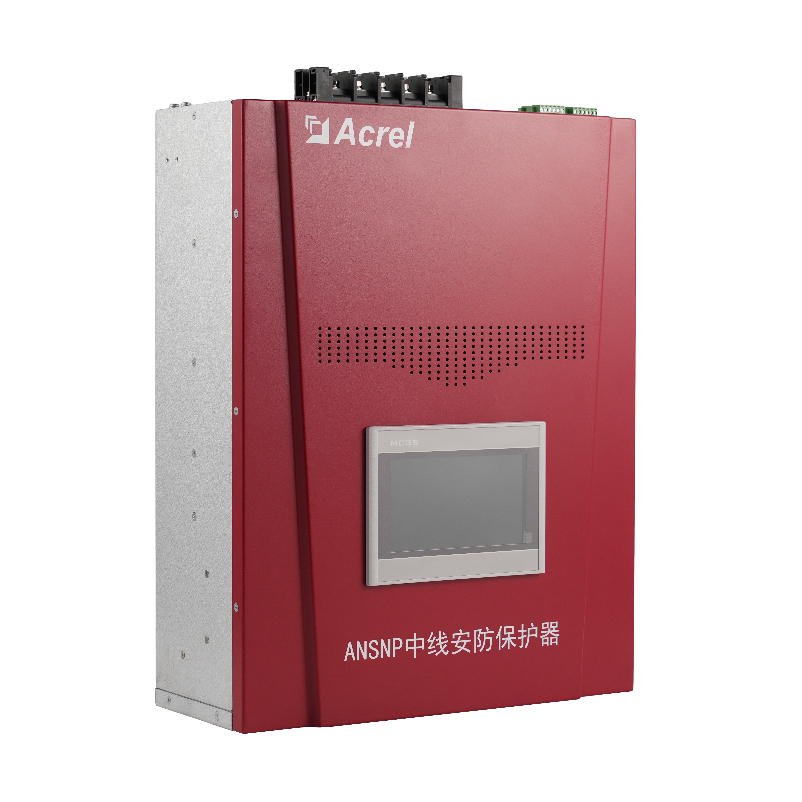
2.1 Technical Parameters
| rated parameters | |
| Rated Voltage | 380V±15% |
| rated frequency | 50Hz±2% |
| N-line current management capability | ANSNP30: N line current management capability 0-90A; ANSNP50: N line current management capability 0-150A; ANSNP70: N line current management capability of 0-200A; ANSNP100: N line current management capability 0-240A; ANSNP150: N line current management capability 0-300A; |
| Main functions | |
| Reactive current compensation | 容性/感性 |
| Unbalanced current compensation | negative sequence |
| Harmonic current compensation | 3-25th harmonic (optional 3-49th harmonic) |
| mutual inductor | |
| Phase/Line | three-phase four-wire |
| Transformer position | Single device operation: grid side or load side |
| Transformer ratio | 100:5~10000:5 |
| Electrical performance | |
| Grid adaptability | Voltage imbalance<5% Short circuit ratio of public connection point>10 |
| switching frequency | 16kHz |
| Total harmonic compensation rate | >90% |
| Full load loss | <3% |
| response time | <40ms |
| noise | <60dB |
| environmental conditions | |
| store temperature and humidity | -25~55 ℃, 5%~90% without condensation |
| Operating Temperature and Humidity | -10~40 ℃, 5%~90% no condensation |
| Other environments | The environment is free of corrosive gases and conductive dust, with an altitude of less than 1000m. The installation site has no severe vibrations or bumps, and the installation inclination is less than 5% |
| protection function | |
| Output current protection | Support output current limiting Support output overcurrent protection/power device transient overcurrent protection |
| overtemperature protection | Support power device overheating and capacity reduction/protection |
| Abnormal voltage protection for power grid | Support overvoltage, undervoltage, overclocking, and underflocking protection Support voltage imbalance and abnormal voltage harmonic protection |
| communication function | |
| RS485 communication | RS485 port: Supports ModBus protocol for backend monitoring RS485 port: optional ModBus protocol for backend monitoring; Alternatively, customized communication protocols can be selected for controlling reactive power compensation capacitors |
| WIFI communication | Supports TCP ModBus protocol for near end monitoring of mobile apps |
2.2 Functional purpose
①Detect and analyze the current in the terminal circuit, control harmonics and three-phase imbalance, and eliminate the problem of excessive N-line current caused by 3N harmonics and three-phase imbalance, thereby eliminating the electrical fire safety hazards caused by them;
②Intelligent voltage stabilization function, leakage detection, and temperature detection for the end distribution system;
③ Implement system N-line current control, while possessing harmonic current, reactive power, and stray current
The suppression function of sudden changes in current, system current, and harmonic current;
④ System energy-saving function; Reduce system cable losses, minimize losses caused by skin effect, and achieve comprehensive energy conservation. At the same time, it can improve the service life of system components and reduce maintenance costs.
⑤ Wireless data transmission function and mobile APP interaction function; Control device operation start stop, parameter settings, and operation data queries through a mobile app, facilitating operation and maintenance management and operations. The device comes with wireless WiFi communication for near end monitoring of mobile apps, and only supports app installation on Android phones. The distance between the device and the phone is 1m~2m.
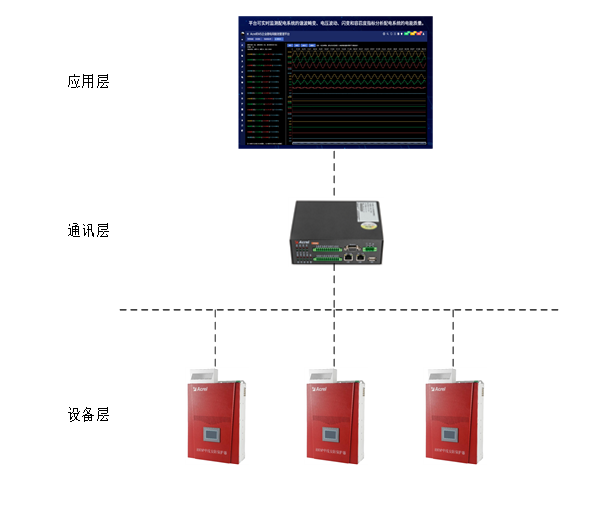
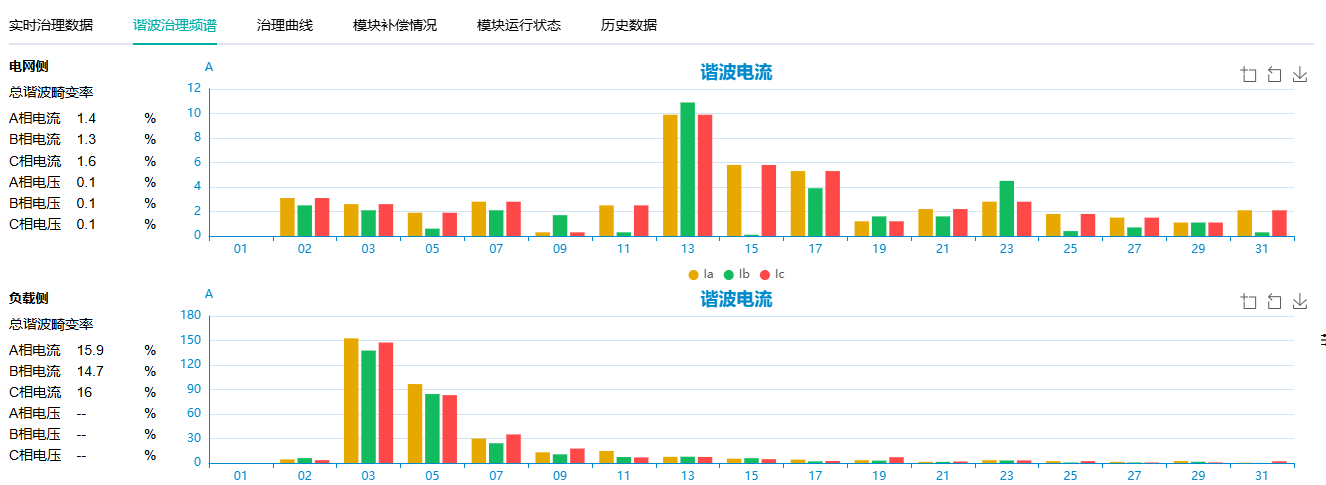
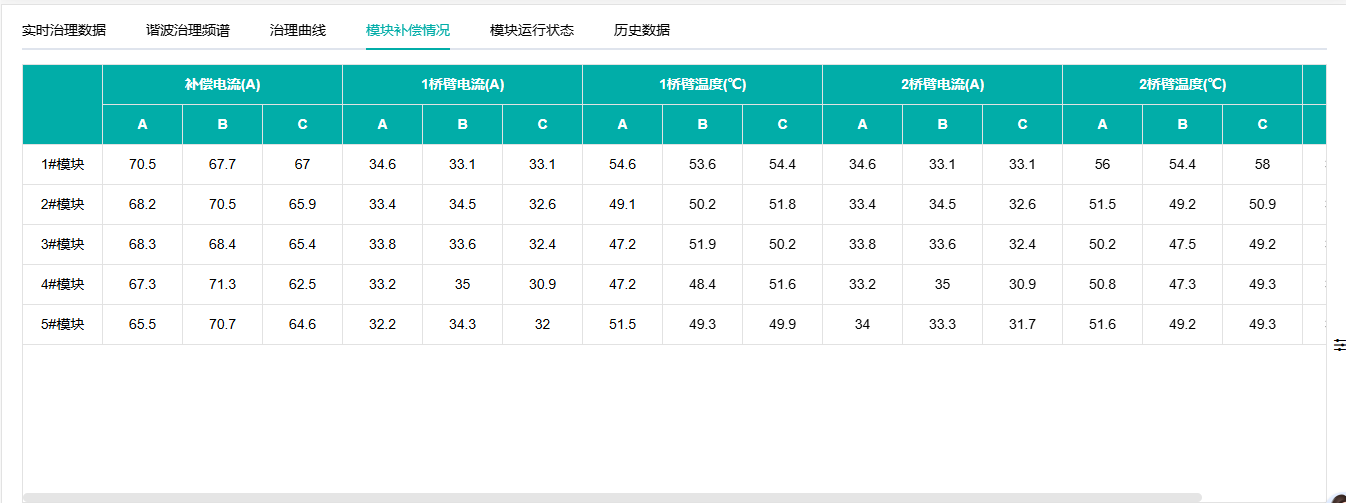
III Terminal governance system


4 Application Industry
Airports/gyms/theaters: lighting and sound systems;
School/Research Institute: Precision Laboratory, Computer Room, Data Center;
Hospitals: Large equipment use rooms for medical treatment, such as operating room floors, medical imaging and laboratory departments, radiotherapy departments, etc;
Commercial complex: large LED screens, stage dimming system, underground parking lot charging station area;
Manufacturing industry: Small and medium-sized manufacturing industry
5 Application Cases
Due to the presence of a large number of LED lighting fixtures and electric heating equipment controlled by thyristor power regulators in a manufacturing enterprise in Jiangsu, a large amount of 3rd harmonic is generated, and the maximum N-line current can reach about 500A. The cables and circuit breakers are overheating abnormally, and the production equipment on site is seriously affected, resulting in a decrease in production efficiency. Conduct N-line treatment testing at 18 end treatment points on site, using a certain end distribution box as an example.


on-site situation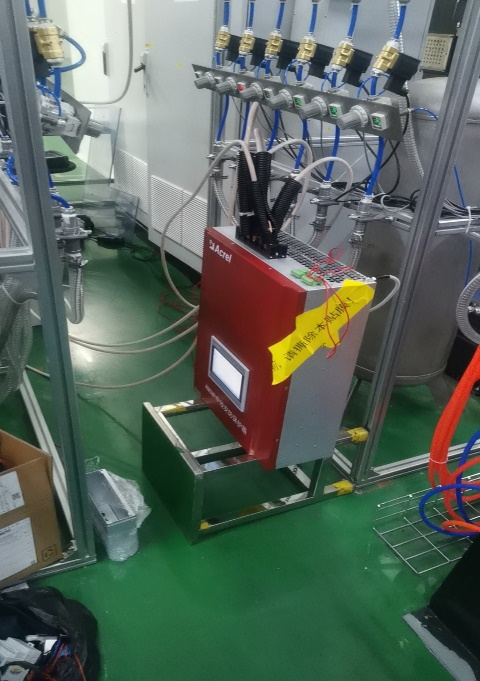
The heating tube has low operation, low power, and low current. At this time, the N-line current is about 120A; Heating tubes are frequently put into operation, operating at 35% power and with a high N-line current of around 480A.
Equipment configuration: 1 ANSNP100 wall mounted module
Governance effectiveness

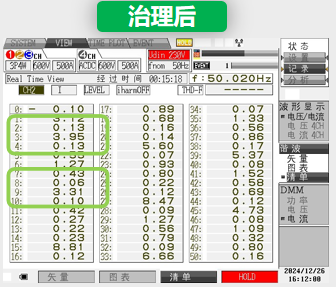
The N-line current decreases. The 3rd and 9th harmonic currents have decreased from 109.86A and 35.66A before treatment to 3.95 and 3.3A. ANSNP's ability to compensate for the 3rd harmonic in the N-line current is 97% or above, which meets the expected treatment requirements in the early stage; The temperature of cables and circuit breakers decreases