-
E-mail
cocbi@163.com
-
Phone
18726217599
-
Address
No. 169 Weisan Road, Tongcheng Town Industrial Park, Tianchang City, Anhui Province
Product Categories
Anhui Henry Instrument Cable Co., Ltd


ZC-JYVP3/22 flame retardant armored signal cable 0.03mm winding layer
NegotiableUpdate on 01/07
- Model
- Nature of the Manufacturer
- Producers
- Product Category
- Place of Origin
Overview
ZC-JYVP3/22 flame retardant armored signal cable 0.03mm winding layer $r $n Our factory mainly produces PVC insulated power cables, cross-linked polyethylene power cables, electrical equipment wires and cables - various power source connection lines that directly transmit electrical energy from the distribution points of the power system to various electrical equipment and appliances, various industrial and agricultural electrical installation lines, and control signal wires and cables
Product Details


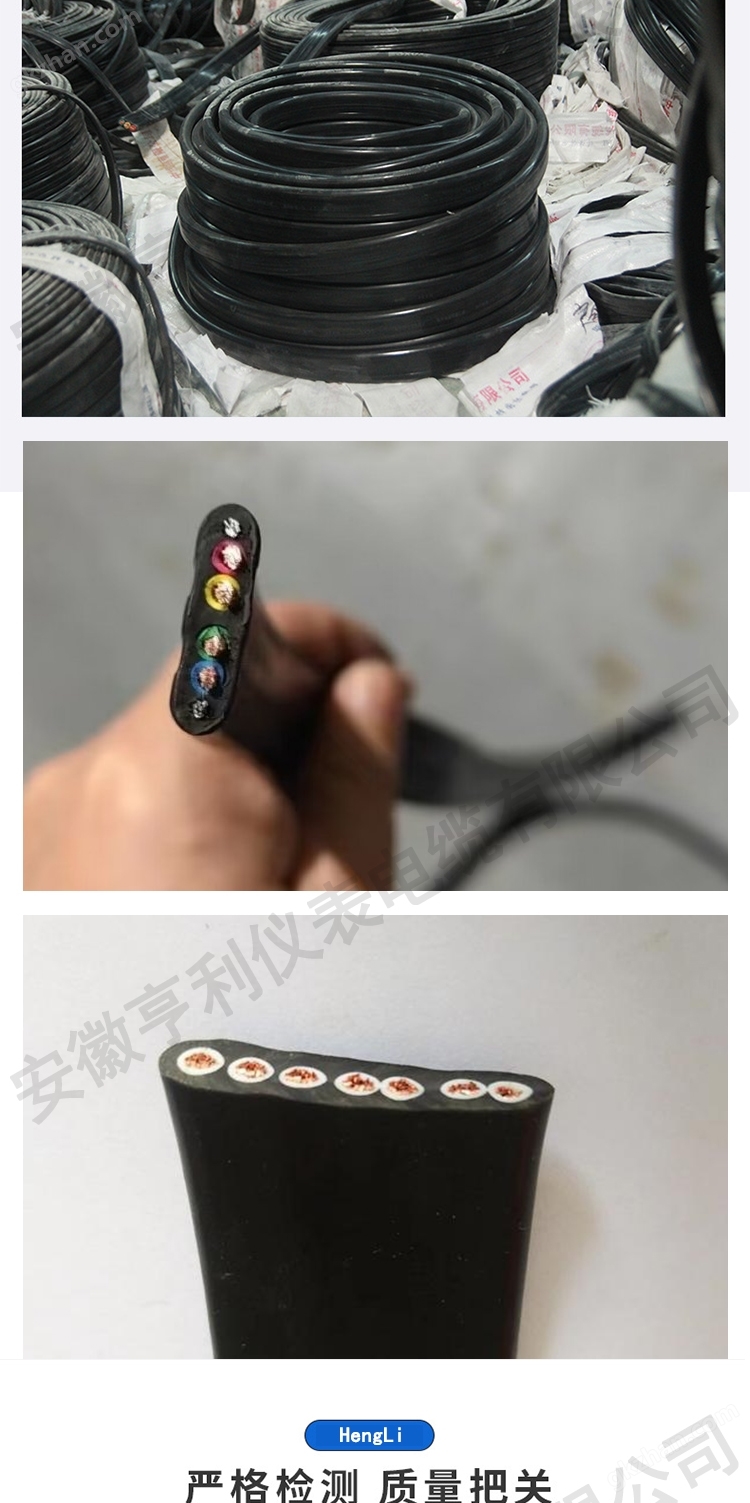

ZC-JYVP3/22 flame retardant armored signal cable 0.03mm winding layer
ZC-JYVP3/22 flame retardant armored signal cable 0.03mm winding layer
Quality issues to be noted in the laying of signal cables: When laying sand cover plates or bricks for buried cables, precautions should be taken to prevent the removal of debris in the trench, the use of fine sand or soil, loose cover plates or bricks, and missing parts. The construction manager should strengthen inspections. When the cable enters the indoor cable trench, it is necessary to prevent water from entering the trench due to poor waterproof treatment of the conduit. Construction should strictly follow the specifications and process requirements. Oil immersed cables should prevent loose lead sealing and oil leakage at both ends. Provide technical training to construction operators to improve their operational skills. When laying cables along brackets or cable trays, measures should be taken to prevent uneven arrangement and severe crossing of cables. Before cable construction, the cables must be arranged in advance, a layout chart should be drawn, and construction should be carried out according to the chart. When laying cables, they should be laid one by one and fixed one by one. Cables with hemp protection layer should be brought into the room to prevent them from not undergoing hemp stripping, oil brushing, and anti-corrosion treatment. Cables laid along cable trays or pallets should be prevented from having insufficient bending radius. When constructing cable trays or pallets, construction personnel should consider meeting the requirements of the bending radius of the cross-sectional cables laid on the tray or pallet. Prevent cable signage from being installed improperly or missing. It should be reviewed by a dedicated person. Quality records, quality assurance documents; Cable product qualification certificate. Cable insulation shake test record or voltage withstand test record. Acceptance record of concealed works. Certificates of various metal steel materials and qualification certificates. Construction records: self inspection records. Quality inspection and evaluation records for cable engineering sub items. Acceptance records of sub projects.
Electric wires and cables mainly include bare wires, electromagnetic wires, insulated wires for motors and electrical appliances, power cables, communication cables, and optical cables. Wire and cable refer to materials used for power, communication, and related transmission purposes. There is no strict boundary between "wires" and "cables". Products with fewer cores, smaller diameters, and simpler structures are usually referred to as wires, those without insulation are called bare wires, and others are called cables; A conductor with a cross-sectional area greater than six square millimeters is called a large wire, a conductor with a cross-sectional area less than or equal to six square millimeters is called a small wire, and an insulated wire is also called a laid wire. Electric wires and cables mainly include bare wires, electromagnetic wires, insulated wires for motors and electrical appliances, power cables, communication cables, and optical cables. Cables include power cables, control cables, compensation cables, shielded cables, high-temperature cables, computer cables, signal cables, coaxial cables, fire-resistant cables, marine cables, and so on. They are all composed of multiple strands of wires, used to connect circuits, appliances, etc. Electric wires are generally conductive metal wires used to carry electrical current. There are various forms such as solid, twisted, or foil woven. Divided into two categories based on insulation condition: bare wires and insulated wires. A cable is an insulated conductor composed of one or more conductive wires that are mutually insulated and placed in a sealed sheath. It can be covered with a protective layer for transmitting, distributing electrical energy or transmitting electrical signals. The main difference between it and ordinary wires is that the cable size is larger and the structure is more complex. The difference between wires and cables is that wires are generally smaller in size and simpler in structure, but sometimes cables are also classified as general wires.
Similar Product Recommend