-
E-mail
cocbi@163.com
-
Phone
18726217599
-
Address
No. 169 Weisan Road, Tongcheng Town Industrial Park, Tianchang City, Anhui Province
Product Categories
Anhui Henry Instrument Cable Co., Ltd

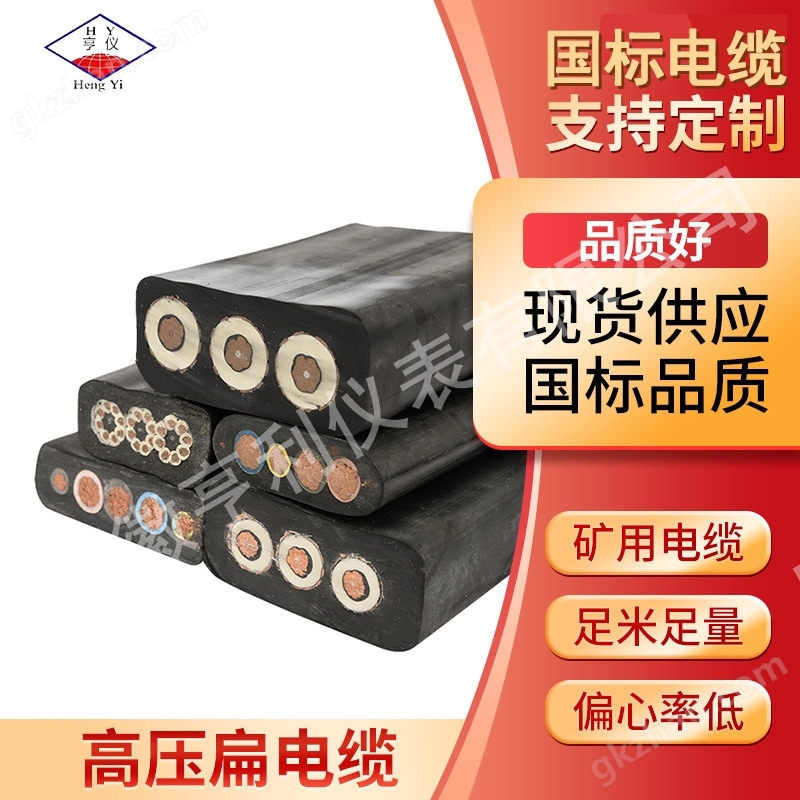


Special flat cable ZR-YFFB with tensile strength of 10N/mm2
NegotiableUpdate on 01/07
- Model
- Nature of the Manufacturer
- Producers
- Product Category
- Place of Origin
Overview
Special flat cable ZR-YFFB $r $n with tensile strength of 10N/mm2. Product features and uses: This product has the characteristics of cold resistance, softness, wear resistance, oil resistance, etc., and is suitable for power transmission lines, control, lighting, communication lines, and other mobile electrical equipment with special requirements such as cold resistance and oil resistance for AC rated voltage of 0.6/1KV and below. This product has been widely used in metallurgy, power, shipbuilding, ports and other industries. The product follows the standard, and the flame retardant performance test follows GB12666.5-90 regulation three: usage characteristics, AC rated voltage, maximum working temperature: 105 ℃
Product Details


Special flat cable ZR-YFFB with tensile strength of 10N/mm2
Special flat cable ZR-YFFB with tensile strength of 10N/mm2
The long-term allowable working temperature for high-voltage flat cable conductors is 70 degrees for nitrile composites and 180 degrees for silicone rubber. The minimum bending radius of the cable is ten times the diameter of the short side of the cable. This product is mainly used for power connection and control signal lighting of various mobile power devices in industries such as transportation, machinery, electrical, mining, etc. The composition meaning of product varieties, specifications, and models for the YFFB series can be found in the markings on the surface of the cable. The ambient temperature for cable laying should not be lower than minus 40 degrees Celsius, the temperature for nitrile vinyl chloride polymer cables should not exceed 70 degrees Celsius, and the temperature for silicone rubber cables should not exceed 180 degrees Celsius. Cables should not be left in water for a long time, and nitrile chloride polymer cables should not be operated at high temperatures for a long time. The rated voltage of the cable should be greater than or equal to the rated operating voltage of the system. In a DC system, the standard voltage of the system should not exceed 1.5 times the rated voltage of the cable; The operating voltage of the system should not exceed one and a half times the rated voltage. During the process of cable laying and installation, abandoning materials does not have a negative impact on the environment. But abandoned items should be cleaned up in a timely manner. Technical characteristics: The single wire conductor is a bare copper conductor. The outer sheath rubber of the cable is made of butadiene vinyl chloride polymer or silicone rubber, which has the characteristics of heat radiation resistance, cold resistance, acid and alkali resistance, corrosive gas resistance, waterproofing, etc. P-type cable insulation has shielding function. The surface of the cable is smooth, without cracks, bumps, or sulfide particles. Cable laying and installation: Cable laying and installation should be undertaken by qualified personnel with practical work experience. Cable laying should be carried out using specialized equipment and tools that meet the requirements, such as pay off racks and guide wheels. The synchronous laying method can use end traction, mechanical transportation, and manual assistance guidance. Effective measures should be taken during cable laying to prevent scratches on the ground, trench walls, pipe openings, and machinery, ensuring the integrity of the cable during laying. During installation, cables are not allowed to twist. If any twisting occurs, it should be removed in the direction of the twisting. Cables cannot be directly buried underground or soaked in ditches. Precautions for cable transportation, storage, loading and unloading, preservation, and on-site placement. Product acceptance and inspection: After the product arrives at the destination, the user should conduct timely inspection and acceptance. When unpacking the product, the surface protective layer of the cable should not be damaged. Inspection content: Check whether the cable model, specifications, and length are consistent with the bill of lading. Check whether the surface of the cable is intact, whether there are cracks or other defects, whether the outer diameter of the cable meets the cable parameters, and whether the outer diameter is uniform. Is there any obvious deformation or distortion on the cable reel, and is the cable end capped. Product certificate, one copy for each plate and item, one quality assurance certificate, and if required by the user, one product user manual. The insulation material adopts high-strength wear-resistant nitrile composite insulation material, and the insulation should be continuously extruded on the conductor, with a smooth, round and defect free surface. The surface should be smooth, round, and defect free. Cable installation and precautions: Cable laying should not be twisted, that is, the cable should not be untied from one end of the cable reel. Instead, the cable reel should be rotated first to unfold the cable, and if necessary, the cable can be unfolded or hung up. Attention must be paid to the minimum bending radius of the cable. Both points of the cable must be fixed, or at least fixed at the moving end of the drag chain. The distance between the moving point of a general cable and the end of the drag chain should be thirty times the diameter of the cable.
Similar Product Recommend