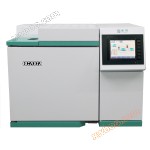
GC900ECharacteristics and Technical Parameters of High end Gas Chromatography Instruments
1、 Event Time Program:
Motherboard can set time program (external events): 12 channels
2、 Voltage range:
220V ± 10% Other voltages+5% -10%
3、 Heating zone:
1. Control of eight independent heating zones (including furnace box temperature control)
2. Maximum operating temperature in the auxiliary heating zone: 400 ℃
3. Independent small column box heating zone can be set
4、 Indicators of column temperature box
1. Column box size: 280 × 300 × 180 mm
2. Operating temperature range: 5 ℃ to 400 ℃ above room temperature
3. Liquid nitrogen cold trap can be used: -80 ℃ to 400 ℃
4. Dry ice cold trap can be used: -55 ℃ to 400 ℃
5. Program warming up: 24 levels and 25 platforms
6. Temperature setting accuracy: 0.1 ℃
7. Maximum program heating speed: 120℃/min
8. Maximum method runtime: 999.99 minutes
9. Operable column loss compensation (dual channel)
10. Reduce the temperature from 350 ℃ to 50 ℃ for ≤ 4 minutes (equipped with a variable frequency motor)
5、 Injection port
1. Dual channel injection port
2. Optional types of injection ports:
3. Fill the column injection port (with spacer purge, can be connected to a large-diameter capillary column)
4. Capillary Column Split/Non Split Injection Port
5. Program heating cold column head injection port
6. Series connection of volatile components into the sample inlet (specially equipped with sample pretreatment devices such as headspace/blowdown capture/thermal desorption)
6、 Fill column injection port:
1. High precision electronic pressure/flow control
2. Maximum operating temperature of 400 ° C
3. Column head pressure setting range: 0-100psi
4. Column head pressure control setting accuracy: 0.01psi
5. Total flow setting range: 0 to 100 mL/min
6. Flow setting accuracy: 0.1mL/min
7. Replace the variable diameter connector to adapt to 1/4 inch, 1/8 inch packed columns, and 0.53/0.32mm capillary columns
7、 Diversion/Non split capillary column injection port
1. High precision electronic pressure/flow control
2. Maximum operating temperature of 400 ° C
3. Column head pressure setting range: 0-100psi
4. Column head pressure control setting accuracy: 0.01psi
5. Range of total flow setting:
0-1000ml/min (helium)
0-200ml/min (nitrogen)
6. Flow setting accuracy: 0.1ml/min
7. Maximum diversion ratio: 1:1000
8、 Program heating cold column head injection port
1. High precision electronic pressure/flow control
2. Column head pressure control setting accuracy: 0.01psi
3. Column head pressure setting range: 0-100psi
4. Maximum operating temperature of 400 ° C
5. Column box temperature tracking mode and self pass program heating mode
6. Suitable for 0.53/0.32/0.25/0.20mm capillary column
9、 Volatile serial injection port
1. High precision electronic pressure/flow control
2. Column head pressure setting range: 0-100psi
3. Column head pressure control setting accuracy: 0.01psi
4. Total flow setting range: 0-1000 ml/min (helium or hydrogen)
5. Flow setting accuracy: 0.1ml/min
6. Maximum operating temperature of 400 ° C
10、 Detector
1. All detectors are equipped with electronic flow control modules.
2. Optional detector
Hydrogen flame ionization detector (FID, logarithmic amplifier)
② Thermal conductivity detector (TCD)
③ Electron Capture Detector (Microcell ECD)
④ Flame photometric detector (FPD)
⑤ Helium Ionization Detector (PDIHID)
11、 Hydrogen flame ionization detector(FID)
1. High precision electronic flow/pressure control
2. Adaptation to packed columns and capillary columns
3. Maximum operating temperature of 400 ° C
4. Minimum detection limit:< 1.0pg/s(n-C16)
5. Dynamic linear range: 107(+10%)
6. Data collection frequency: up to 100Hz
12、 Electron capture detector(ECD)
1. High precision electronic flow/pressure control
2. Adaptation to packed columns and capillary columns
3. Maximum operating temperature of 400 ° C
4. Hidden anode (with blowing)
5. Detector compensation gas type: 5% methane/argon or nitrogen
6. Data collection frequency: up to 100Hz
7. Dynamic linear range:> 5*105
8. Minimum detection limit:< 10fg/ml (formaldehyde)
13、 Flame photometric detector(FPD)
1. High precision electronic flow/pressure control
2. Maximum operating temperature of 400 ° C
3. Minimum detection limit:< 10pg S/sec, < 0.2 pgP/sec (methyl parathion)
4. Dynamic linear range:> ten3S,>104P
14、 Thermal conductivity detector(TCD)
1. Electronic pressure/flow control
2. Maximum operating temperature of 300 ° C
3. Minimum detection limit (MDL):<400 pg/ml (C3H8), using He carrier gas (laboratory environment may affect MDL)
4. Sensitivity:> 10000 mv•ml/mg
5. Linear dynamic range: 105(± 10%)
15、 Auxiliary electronic flow control module
1. Three channel auxiliary pressure control module (pressure control mode)
2. Two channel auxiliary pressure control module (pressure control mode)
3. Single channel auxiliary pressure control module (pressure control mode)
4. Single channel gas flow control module (pressure/flow control mode)


Introduction to Simulated Distillation Software:
Chromatographic simulation distillation is the use of chromatographic techniques to simulate the classical real boiling point distillation method, in order to determine the distillation range of various petroleum fractions. It has the characteristics of accurate data, fast analysis, and low sample usage. With the widespread use of elastic quartz capillary columns, rapid simulation distillation analysis methods are receiving increasing attention.
1、 Principle of simulated distillation
1. Measure the retention time of known components in a mixture of n-alkanes using a non-polar chromatography column with a certain degree of separation under linear programmed temperature conditions.
2. Under the same chromatographic conditions, separate the samples in boiling point order and perform slice integration to obtain the corresponding accumulated area and retention time.
3. After temperature time interpolation correction, the temperature corresponding to the percentage yield is obtained, which is the distillation range.
4. The cumulative area percentage is the yield, and since the relative weight correction factor of hydrocarbons is approximately 1, it can be considered as the mass percentage content of the sample [% (m/m)]. Secondly, the existing chromatographic simulation distillation method

3、 Simulated distillation steps
1. Perform chromatographic experiments to obtain spectra.
2. Simulate distillation software to read spectra and analyze them
3. Make associations.
4、 Software functions
1. Reading spectra - the difficulty lies in the combination with chromatographic workstations.
2. Calculation - Slice Integration and Interpolation Analysis.
3. Correlation - Regression Analysis.

5、 Four characteristics:
Feature 1: The software can directly read spectral data from various workstations without the need for manual conversion.

Feature 2: Convenient operation, analysis can be completed with just a mouse click.

Feature 3: Integration with Office software, direct import of analysis results into EXCEL for easy operation.

Feature 4: Automatically establish an ID table.

*This system can perform correlation calculations from ASTM D 2887, SH/T0558, and extended SH/T0558 to ASTM D 86, GB/T6536, and ASTM D1160 for vacuum distillation based on customer experimental data.

Related results: