-
E-mail
5hcoil@163.com
-
Phone
13531822969/ 13590763352
-
Address
Lanbian Industrial Zone, Nanlang Town, Zhongshan City, Guangdong Province
Wuhuan Electronics Factory, Nanlang Town, Zhongshan City
Survey on the Application of Electronic Transformers and Inductors in Automation Equipment in 2015
Date: 2015-08-15Read: 48
In today's world where the demographic dividend is gradually disappearing, the labor cost pressure caused by the "labor shortage" has led China's manufacturing industry into a low profit era. As a part of the manufacturing industry, electronicsTransformerandinductorThe industry is no exception. Reducing costs, ensuring product quality, and increasing production capacity are the ultimate ways to create value in the era of low profits, and transitioning to automation is currently an important measure to meet this demand.
So, currentlyAutomated equipmentInElectronic TransformerInductors, etcMagnetic componentsHow is the application situation in enterprises? What benefits can the application of automation equipment bring to enterprises? In order to provide electronicsTransformerandinductorIndustry enterprises provide accurate information on the application of automation equipment to promote the transformation of the industry towards automation. Da Bit Information has specifically conducted this survey.
1、 Background investigation
Labor shortage leads to rapid increase in labor costs
The "labor shortage" has always been a phenomenon for manufacturing enterprises in recent years. In July 2015, the supply and demand report released by the human resources market in Zhejiang Province showed that the total number of people needed by enterprises was 603000, while the total number of job seekers during the same period was only 354000, resulting in a labor gap of 250000. Raising wages is often an effective means for companies to alleviate the "labor shortage", but this has led to a rapid increase in labor costs, one of the most important competitive advantages of Chinese manufacturing.
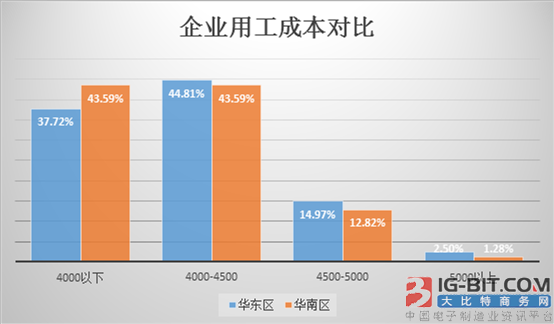
In this participation in the East China electronic transformer andinductorAmong the 200 companies surveyed on the application of automation equipment in the industry, 37.72% of production line employees have wages (including five insurances, one fund, and other subsidies) below 4000 yuan, but 44.81% of companies have an average labor cost of 4000-4500 yuan, 14.97% of companies have labor costs exceeding 4500 yuan, and 2.5% of companies even exceed 5000 yuan.
In the South China region, 43.59% of enterprises have a price below 4000 yuan, 43.59% of enterprises have a price below 4000 yuan, 12.82% of enterprises have a price above 4500 yuan, and even 1.28% of enterprises have a price above 5000 yuan.
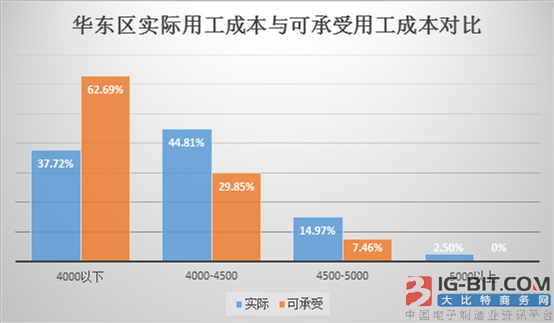
Under the pressure of increasing low wage standards year by year and labor shortages, the profits of the manufacturing industry have been further compressed. Electronic transformersinductorIs the current labor cost of magnetic component companies within their acceptable range? According to the survey, both in the East and South China regions, the actual labor costs of enterprises have exceeded the acceptable range. 44.81% of enterprises in the East China region have actual employment of 4000-4500 yuan, but only 29.85% of enterprises can afford this wage level; In the South China region, 43.59% of enterprises have a labor cost of 40004500 yuan, but only 28.21% of enterprises can afford it.
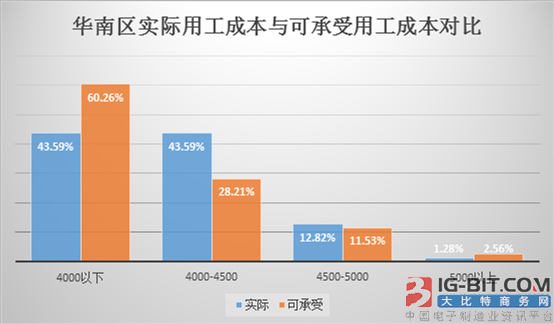
At present, the labor costs of enterprises have exceeded their acceptable range. According to the 2014 China Regional Overall Reward Research Report, the salaries of grassroots employees, mainly in the operator position, have maintained significant growth, with an actual salary increase of 10.5% in 2014. According to such an increase, the future salary pressure of enterprises will inevitably be greater.
Younger operators and high personnel turnover
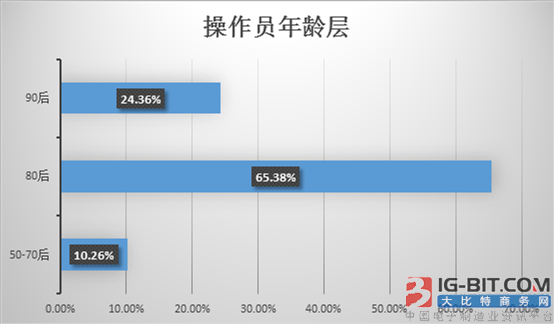
In recent years, the age structure of migrant workers has become increasingly younger, and the 80s and 90s generations of farmers are becoming the main force of migrant workers. The survey results also show that enterprises dominated by 80s and 90s generations account for 65.38% and 24.36% respectively, and the proportion of employees in these two age groups exceeds 60%.
However, at the same time, compared to their parents, migrant workers in this age group have higher job demands and turnover rates, which is particularly prominent in the manufacturing industry. According to the "2015 Resignation and Salary Adjustment Research Report" by 51job.com, after two consecutive years of decline in employee turnover rate, there was a slight rebound in 2014 with a slight increase in employee mobility. The overall turnover rate was 17.4%, with the manufacturing industry leading the way with a turnover rate of 20.4%.
Among the 200 companies participating in this survey, 24.35% had a personnel turnover rate of over 20% in 2014, with 3.84% having a personnel turnover rate of over 50%.
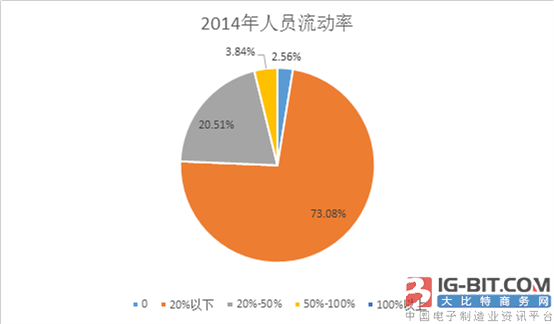
On the one hand, the widespread "labor shortage" has led to an increase in labor cost pressure, and on the other hand, the high turnover of personnel has caused talent loss and instability in enterprise development. Therefore, more and more enterprises are seeking to solve these problems by changing traditional industrial production methods and transforming towards automation.
2、 Participate in investigating the situation of enterprises
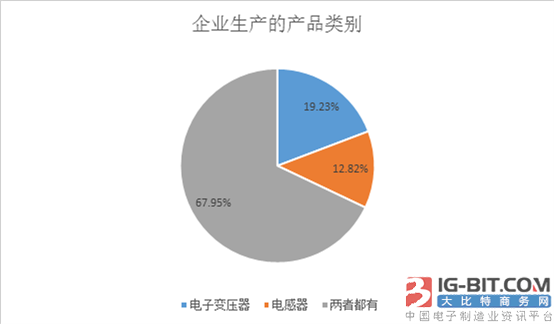
This survey targets 200 electronic transformer and inductor companies in the East China region. Among them, the majority of enterprises that produce both electronic transformers and inductors account for 67.95%, while those that only produce electronic transformers or inductors account for 19.23% and 12.82%, respectively.
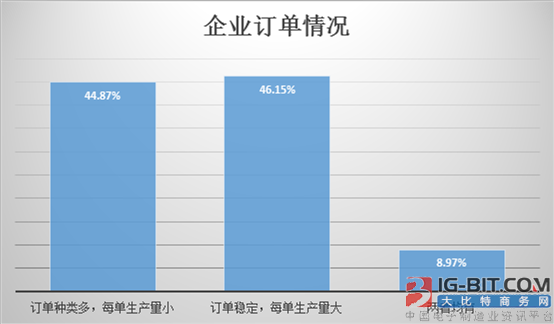
Among these 200 companies, 44.87% have multiple types of orders and small production volumes per order, while 46.15% have stable orders and large production volumes per order, and the remaining 8.97% have both types of orders.
3、 Introduction of automation equipment
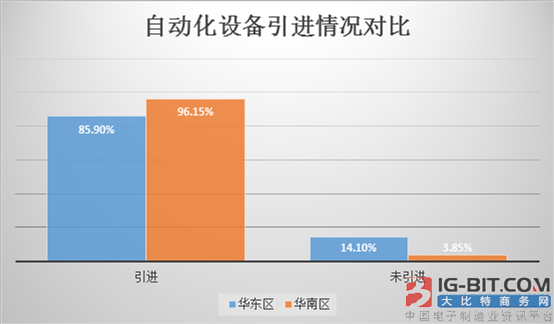
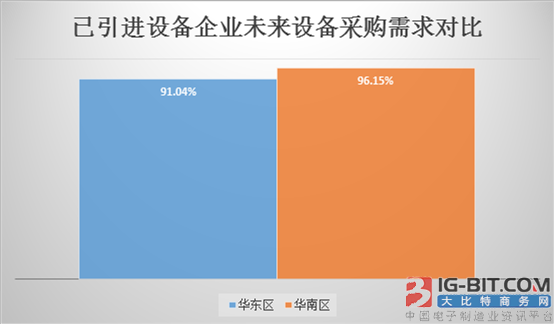
The survey results show that 85.9% of electronic transformer and inductor enterprises in East China have introduced automation equipment, while only 14.1% of enterprises have not yet introduced them. However, these enterprises that have not yet introduced automation equipment plan to introduce them in the next 2-3 years. Compared with the East China region, the automation level of enterprises in the South China region is slightly higher: currently, 96.15% of enterprises have introduced automation equipment. Only 3.85% of enterprises have not yet introduced automated production equipment.
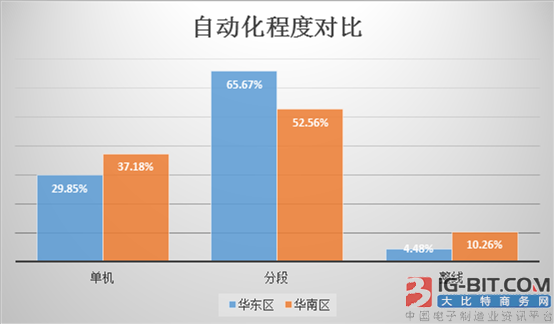
Due to the wide variety and strong customization of electronic transformers and inductors, most industries are still generally stuck in single machine or semi automated forms. According to the survey, 65.67% of enterprises adopt segmented automation, and 29.85% of enterprises adopt single machine automation. Due to limitations in product design, lifecycle, mass production, limited equipment universality, and high prices, only 4.48% of enterprises adopt full line automation.
Compared with the East China region, the situation of single machine automation in enterprises in the South China region is more prominent, with a lower proportion of segmented automation. However, the automation of the entire line is higher than that in the East China region: currently, 52.56% of South China enterprises adopt segmented automation, 37.18% of enterprises adopt single machine automation, and the automation of the entire line is 10.26%.
2014In the year, 91.04% of electronic transformer and inductor companies introduced automation equipment, of which 28.36% purchased single machine equipment, and the largest number of companies purchased 50 units in a year. 56.72% of enterprises have purchased segmented automation equipment, and many enterprises have basically achieved segmented automation across the entire line. Some enterprises invested 5 million yuan in equipment last year. Only 5.97% of enterprises purchase automation equipment for the entire production line, with the majority purchasing 10-15 units.
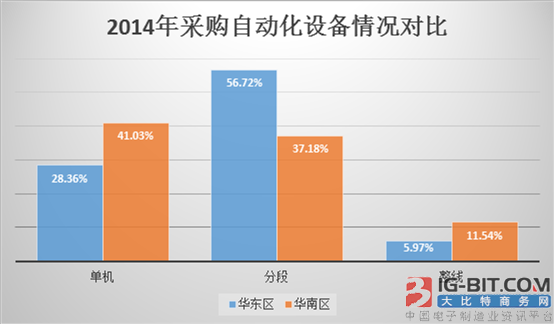
In the South China region, 41.03% of enterprises purchase single machine equipment, with the largest number of enterprises purchasing 150 units per year. The procurement volume of segmented equipment is also as high as 30-40 units. According to the survey results, the investment in automation equipment in the East China region is far less than that in the South China region. However, 91.04% of electronic transformer and inductor enterprises stated that they will increase investment in this area within 2-3 years. The South China region also has a strong demand for introducing equipment: 96.15% will continue to introduce automation equipment within 1-3 years. Low order volume, low equipment utilization, and high costs are still important factors affecting enterprise investment.
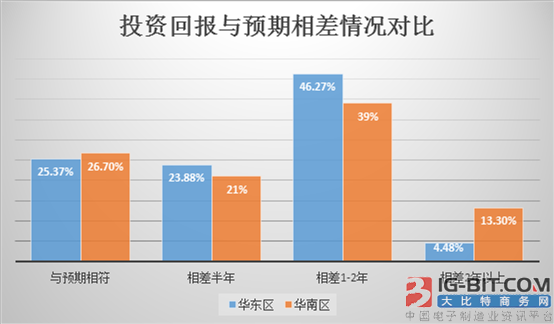
It is one of the important criteria for enterprises to consider whether to invest in automation equipment and how much to invest. 34.33% of enterprises in the East China region stated that they can recover costs within 2 years, 59.7% of enterprises have a period of 3-5 years, and 5.97% of enterprises have a period of more than 5 years. In the South China region, 44% of enterprises have equipment life of less than 2 years, 48% of enterprises have equipment life of 35 years, and 8% of enterprises have equipment life of over 5 years.
According to the survey, 25.37% of enterprises in the East China region have a period that matches their actual return, while only 4.48% have a difference of more than 2 years in their actual return period. A difference of 1-2 years is quite common in the industry, accounting for 46.27%. In the South China region, 26.7% of enterprises have equipment return periods that match, 21% of enterprises have a difference of six months, 39% of enterprises have a difference of 1-2 years, and 13.3% of enterprises have a difference of more than 2 years.
4、 The effectiveness of introducing automation equipment
The introduction of automation equipment is an important measure for enterprises to solve problems such as labor shortage, high personnel turnover rate, and rising labor costs. So, what is the effectiveness of this measure? Does it really create value for businesses?
用工成本
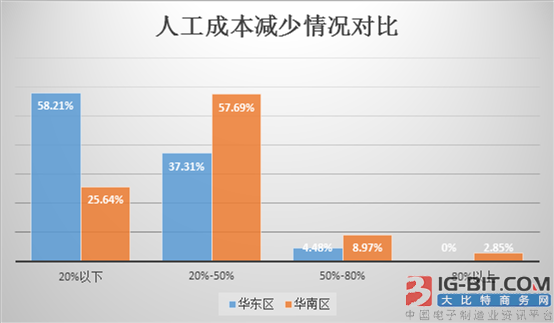
172 electronic transformer and inductor companies that have introduced automation equipment in the East China region have all reported a reduction in labor costs after adopting automation equipment. 37.31% of companies have reduced labor costs by 20-50%, and 4.48% have reduced them by 50-80%; The remaining 58.21% of enterprises have decreased by less than 20%. In the South China region, 25.64% of enterprises decreased by less than 20%, 57.69% of enterprises decreased by 20% -50%, 8.97% of enterprises decreased by 50% -80%, and 3.85% of enterprises decreased by more than 80%.
production capacity
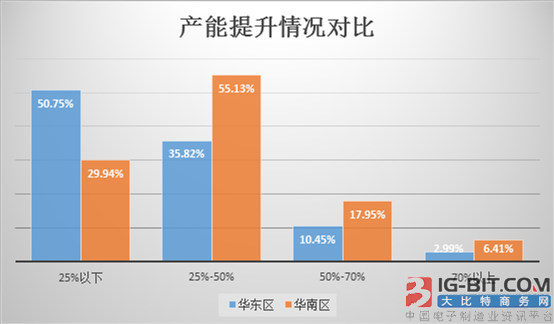
The introduction of automation equipment will have a positive impact on improving production efficiency and capacity while reducing labor losses. According to the survey, after adopting automation equipment, the production capacity of enterprises in East China has increased. 50.75% of enterprises have production capacity below 25%, 35.82% of enterprises have production capacity increased by 25-50%, 10.45% of enterprises have increased by 50-70%, and 2.99% of enterprises have increased by more than 70%. In the South China region, 55.13% of enterprises have increased their production capacity by 25% to 50%, 17.95% of enterprises have increased their production capacity by 50% to 70%, and even 6.41% of enterprises have increased their production capacity by more than 70%.
product quality
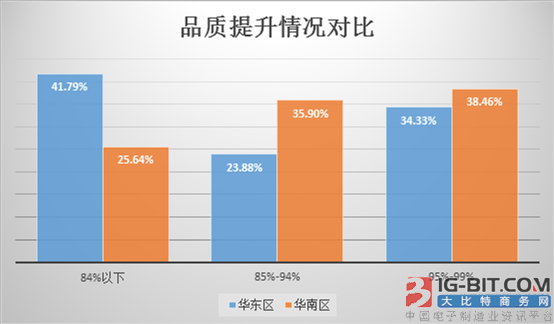
Product quality is the main factor determining the quality of an enterprise, and automation equipment has advantages such as repeatability and production stability. Therefore, introducing automation equipment can improve product quality to a certain extent. Among the 172 companies in the Huadong District surveyed, only 1.49% of them believe that automation is of no help in improving product quality; 41.79% of enterprises have achieved a product quality improvement of less than 84%; 56.72% of enterprises have achieved a product quality improvement of over 85%, with 34.33% of enterprises actually improving by 95-99%. In the South China region, 25.64% of enterprises have a yield rate lower than 84%, while 38.46% of enterprises have a yield rate increase of 95% -99%; The yield rate of 35.9% of enterprises has increased by 85% to 94%.
order volume
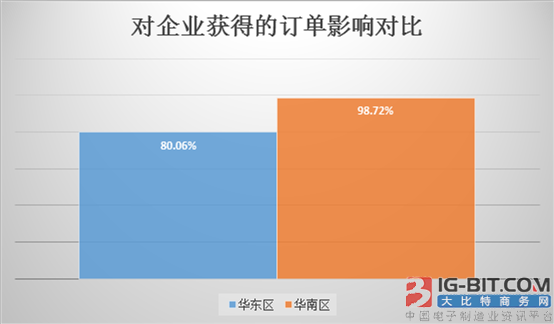
After the introduction of automation equipment, both production capacity and product quality have been improved, which directly leads to an increase in the number of orders for enterprises. A survey shows that 80.6% of enterprises in East China region indicate that downstream customers consider the automation situation of the enterprise when choosing suppliers, and believe that adopting automation equipment will help increase orders. In this group of enterprises, the increase in order quantity has been above 7%, with the largest increase reaching up to 70%. In the South China region, 98.72% of enterprises believe that introducing automation equipment is helpful in obtaining customer orders.
5、 Satisfaction of enterprises with the application of automation equipment
The introduction of automation equipment has reduced cost pressure for electronic transformer and inductor enterprises, improved production capacity and product quality, and helped to obtain orders. Therefore, 91.03% of enterprises are satisfied with the existing automation equipment, but 8.97% of enterprises are still not satisfied. Some companies believe that the existing automation equipment has poor flexibility, difficult debugging, and requirements for product structure, coupled with the limitations of the equipment itself, making it difficult to achieve results.
Stability and efficiency are currently the two most important issues for electronic transformers and inductors that use automation equipment. High costs, poor flexibility, inability to meet diverse varieties, small batch production requirements, difficult debugging, and complex processes all urgently need to be addressed. Many companies have expressed that their existing automation equipment is not yet mature enough, and some key processes, such as fully automatic winding and automatic transfer, are difficult to achieve automation. Details still need improvement.
In order to solve the labor cost and personnel flow pressure, improve market competitiveness, and achieve industrial upgrading, electronic transformer and inductor enterprises have been transforming towards automation and introducing a large number of automation equipment. Although companies believe that there are still many shortcomings in existing automation equipment, as mentioned above, electronic transformer and inductor companies still have a strong passion for automation in 2-3 years.
The trend is towards automation due to labor shortage, high population mobility, and the promotion of national policies.