-
E-mail
rcdq123@163.com
-
Phone
13918107979
-
Address
No. 128 Xiangyin Road, National Science and Technology Park, ShanghaiTech University, Shanghai
Shanghai Ruicheng Electric Co., Ltd
GPS clock synchronization system reduces data deviation and ensures orderly operation of business
Date: 2025-10-24Read: 21
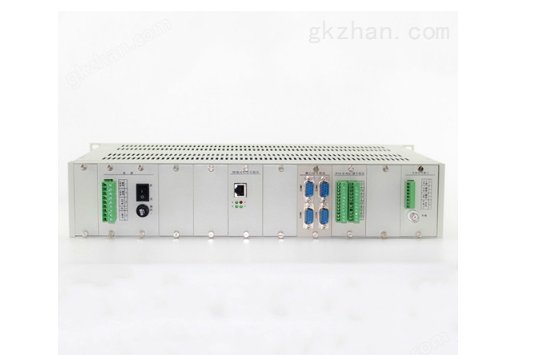
Accurate time synchronization is the foundation for ensuring data consistency and orderly business operations in financial transactions, power systems, communication networks, and industrial automation. The GPS clock synchronization system, as a high-precision time synchronization solution, can effectively reduce data bias and ensure time consistency between various systems and devices by utilizing the satellite signals of the Global Positioning System (GPS), thereby ensuring efficient and orderly operation of business.
working principle
The core is to calibrate the local clock using high-precision time signals sent by GPS satellites. The GPS satellite system consists of multiple satellites that orbit the Earth and continuously send signals containing precise time information. The GPS clock synchronization device receives these signals, decodes the time information, and compares and calibrates them with the local clock. In this way, the local clock can maintain a high degree of consistency with the globally unified time standard (such as UTC, Coordinated Universal Time).
The advantage of this time synchronization method lies in its high precision and global coverage. The time accuracy of GPS signals can reach the nanosecond level, far exceeding traditional time synchronization methods such as the Network Time Protocol (NTP). In addition, due to the global coverage of GPS signals, time synchronization can be achieved almost anywhere as long as there is a clear sky view, without being limited by geographical location.
Reduce data bias
In many industries, accuracy and consistency of data are key to business operations. For example, in financial markets, accurate recording of trading times is crucial for the legality of transactions and dispute resolution; In the power system, the equipment of each power station and substation requires precise time synchronization to ensure the stable operation of the power grid; In communication networks, time synchronization between base stations and switching devices is crucial for data transmission and network management.
The GPS clock synchronization system can effectively reduce data bias by providing a high-precision time reference. When the time of each device and system is highly consistent, the timestamp of data is also more accurate, thereby reducing data processing errors and conflicts caused by time differences. For example, in distributed database systems, precise time synchronization can ensure the order and consistency of data, avoiding data loss or duplication caused by time deviations.
Ensure orderly operation of business
In addition to reducing data bias, the GPS clock synchronization system can also ensure the orderly operation of business. In many automation systems, time synchronization is the foundation for achieving precise control and coordination. For example, on industrial automation production lines, each equipment needs to operate in precise chronological order to ensure smooth production processes and consistent product quality. Through the GPS clock system, it is possible to ensure time synchronization of all devices, thereby achieving efficient production scheduling and quality control.
In addition, the GPS clock system can also improve the system's fault tolerance. In a multi node system, if there is a deviation in the time of a node, it may lead to chaos in the entire system. Through GPS clock synchronization, even if one node fails, other nodes can still maintain time synchronization, ensuring the overall stability and reliability of the system.
Application scenarios
Widely used in multiple fields, including finance, electricity, communication, transportation, and industrial automation. In the financial field, banks and stock exchanges use GPS clock synchronization systems to record trading times, ensuring the accuracy and traceability of transactions. In the power system, GPS clock synchronization is used to synchronize the time of power plants, substations, and grid control centers to achieve precise scheduling and fault diagnosis of the grid. In the field of communication, base stations and switching devices achieve precise time synchronization through GPS clock systems, thereby improving network transmission efficiency and stability.
Conclusion
The GPS clock synchronization system, as a high-precision time synchronization solution, can effectively reduce data bias and ensure time consistency between various systems and devices by utilizing GPS satellite signals. It not only improves the accuracy and consistency of data, but also ensures the orderly operation of business, enhances the fault tolerance and reliability of the system.